

University of Texas at Austin
Admission Rate:
27% (90% of spots reserved for Texas residents, so out-of-state acceptance rates are much lower)
Undergrad Enrollment:
42,855
Jewish Enrollment:
2,750 (6%)
Tuition:
in-state average $27,717; out-of-state average $62,330 (individual colleges within UT charge different tuitions)
Test Scores:
ACT (27-33), SAT reading (630-740), SAT math (620-770)

Overview
1
Western Civilization & American Civics

2
Jewish & Israel Studies

3
Outstanding Faculty

4
Jewish Life & Israel Engagement

5
Campus Clubs & Intellectual Culture

6
Antisemitism & Anti-Zionism

7
National Rankings


The JNS Campus Report: Our Methodology

This profile is part of the JNS Campus Report, an effort to evaluate American universities according to criteria that truly matter. We assess institutions across seven distinct fields: (1) the depth of their commitment to Western Civilization, American civics, and great books education; (2) the excellence of their teaching in Jewish and Israel Studies; (3) the presence of world-class faculty in the humanities and social sciences; (4) the quality of Jewish life and Israel engagement on campus; (5) conservative and independent intellectual life outside the classroom; (6) the presence and depth of antisemitism and anti-Zionism on campus; and (7) their standing in the national rankings ecosystem.
UT Austin has long offered one of the strongest liberal arts educations in the country, and has recently begun to develop a strong Civics and Western Civilization program as well. The Thomas Jefferson Center (TJC) for the Study of Core Texts and Ideas, directed by Thomas and Lorraine Pangle, was the primary center for the serious study of Western tradition for many years and offers a certificate requiring coursework in ancient philosophy and literature, foundational religious texts including the Hebrew Bible, the history of Western political thought, and American constitutional principles; an honors track with housing, scholarships, and events; and a Great-Books-style major in European Thought.
The School of Civic Leadership (SCL), launched with $100 million in Board of Regents backing under Justin Dyer, offers a Civics Honors major, a PPE minor, and a growing list of courses in Spring 2026. The Ackerman Program on Jewish and Western Civilization sits within it, and UT Austin hosts the second Rosenthal-Levy Scholars Program. With excellent faculty already in place under the TJC, and the growing SCL, UT Austin is putting together one of the best liberal arts faculties in the country, and the administration is investing heavily to keep it that way.
Jewish campus life is growing, but it is not yet easy to be an observant student. Texas Hillel under Rabbi Stephanie Max is more balanced in orientation than many Hillels nationally and has made deliberate outreach to Orthodox students and Rabbi Zev and Ariela Johnson run a very large Chabad just off campus. Kosher dining is limited, and there is no eruv near campus—the Orthodox community sits in Northwest Hills, a shuttle ride away.
The administrative record is among the firmest at any major American university. President Jay Hartzell called in state law enforcement without extended negotiation, leading to dozens of arrests, and held his position through a no-confidence petition signed by more than 500 faculty. The Diversity, Equity, and Inclusion apparatus has since been dismantled under state law. UT has adopted institutional neutrality and formally rejected demands by the pro-Palestinian Boycott, Divestment, and Sanctions movement.
Western Civilization & American Civics
Does UT Austin have BA programs, honors programs, or a unique school focused on the study of Western Civilization and American civic leadership? Are there exceptional programs or departments in the humanities and social sciences?
- UT Austin stands among the strongest American public universities in its commitment to Western civilization and great books education. The university’s general education requirements earn a B+ from ACTA’s “What Will They Learn?” and the campus hosts two dedicated programs that together constitute a serious liberal arts infrastructure: the Thomas Jefferson Center for the Study of Core Texts and Ideas and the newly established School of Civic Leadership.
- The Thomas Jefferson Center for the Study of Core Texts and Ideas is directed by Thomas and Lorraine Pangle—two of the country’s most distinguished political theorists—and has operated for more than thirty years. The TJC offers a certificate in Core Texts and Ideas requiring coursework across four areas: ancient philosophy and literature, fundamental religious texts (including the Hebrew Bible and New Testament), the history of Western political thought, and American constitutional principles. The Jefferson Scholars Program provides an honors track, pairing a six-course great books sequence with an optional residence hall community, reading groups, and seminars with visiting scholars. The TJC is notable for its integration of biblical and Hebraic material historically absent from comparable programs elsewhere: it regularly offers a course on the Bible and its Interpreters that includes the Fathers According to Rabbi Nathan and Maimonides, and it engages Islamic and Indian subcontinent studies free of the postcolonial frameworks that dominate these fields at most institutions.
- The TJC has also built a major track within the European Studies department—the major in European Thought—for students who want a dedicated great books degree. In Spring 2026, TJC course offerings include Introduction to Ancient Greece; the Bible and its Interpreters; Classics of Social and Political Thought; and Constitutional Principles: Core Texts.
- The School of Civic Leadership, launched in recent years with $100 million in Board of Regents backing, is the university’s most ambitious institutional commitment to civic education. It offers a Civics Honors major, a PPE (Philosophy, Politics, and Economics) minor, and seventeen courses in Spring 2026 spanning presidential leadership, natural law theory, Lincoln as statesman, economics and constitutionalism, statecraft and geopolitics, and the virtues. The school is directed by Justin Dyer, a scholar of natural law and American constitutionalism whose curricular vision is explicitly grounded in the foundational principles of the Western tradition.
- Within the School of Civic Leadership is the Ackerman Program on Jewish and Western Civilization.
- The Ackerman Program “is an educational and research center focused on the influence of Jewish ideas and Jewish history on the Western world and the American republic.” The program adds explicit courses on Jewish thought and history, Zionism and modern Israel, and the Hebraic influence on America, alongside Hebrew language study and a study abroad program in Israel.
- UT Austin is host to the second Rosenthal-Levy Scholars program, offering four-years of full-tuition scholarship for undergraduates interested in the great ideas of Jewish and Western civilization and the responsibilities of American civic leadership.
Jewish & Israel Studies
Does UT Austin have excellent professors, courses, or programs on Jewish thought and civilization and on Israel and the modern Middle East?
UT Austin’s formal Jewish Studies infrastructure has been modest relative to its civic learning programs, but is on a distinct upward trajectory with the expansion of the Ackerman Program. The Jewish Studies department offers courses in Hebrew Bible, classical and medieval Jewish thought, and Jewish civilization from antiquity through the medieval period, taught by faculty with serious scholarly credentials. And the School of Civic Leadership now offers a growing set of courses on Hebraic civilization.
Jacob Howland
is a Distinguished Visiting Professor, currently teaching the School for Civic Leadership’s course on Genesis. Previously, he was the provost and dean at UATX. His scholarly work has focused on Plato’s thought, as well as its connection to Jewish thought. An excellent teacher, who has taught many Tikvah programs.

Yonatan Green
is the inaugural director of the Ackerman Program on Jewish and Western Civilization. A lawyer and scholar of constitutionalism, and an expert on the Israeli judicial system, he teaches a course on nationalism and the Jewish political tradition.
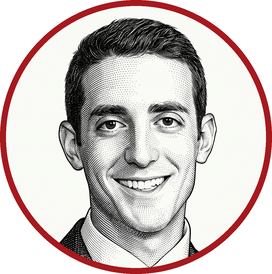
Jonathan Kaplan
, director of the Jewish Studies department, is a scholar of classical Judaism who teaches the recurring Signature freshman seminar on Jerusalem—an early immersion in the contested history and religious significance of the city at the center of the Jewish story—and advanced courses in Biblical Hebrew.
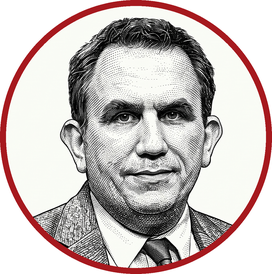
Erik Dempsey
, assistant director of the Thomas Jefferson Center, is a political theorist whose courses on “Jerusalem and Athens” and on “the Bible and its Interpreters” engage the Hebrew tradition with unusual seriousness for a government department. His Bible course includes Maimonides and the Mishnaic sages alongside the Christian tradition, modeling a genuine Athens-Jerusalem dialogue that should make up one pillar of a serious liberal arts education.

Jonathan Schofer
brings expertise in classical rabbinic and medieval Judaism, regularly teaching courses on Jewish civilization from antiquity through the medieval period. His scholarly work on rabbinic ethics and the Hebrew Bible provides the department with a foundation in the deeper layers of the Hebraic tradition.

The most significant development is the development of the Ackerman Program and the associated Rosenthal-Levy Scholars Program. These offer the ability for students to integrate SCL degree requirements with dedicated coursework in Jewish thought and civilization, along with a mandatory study-abroad experience in Israel as well as Hebrew-language coursework.
Outstanding Faculty
Does UT Austin have world-class faculty in the humanities and social sciences?
UT Austin houses a number of faculty of national and international distinction, particularly in political theory, classics, and American political thought. The Government department’s political theory track is one of the best in the country for undergraduates, and its classics department is notably focused on the classics.
Thomas Pangle
arguably the foremost Straussian political theorist currently teaching in the United States. His scholarly work spans Plato, Aristotle, Locke, Tocqueville, Maimonides, and the foundations of liberal democracy; recent courses have covered Maimonides, Hegel, Islamic political theory, and Marx. He remains one of the most serious instructors of the history of political thought available to undergraduates anywhere in the country.
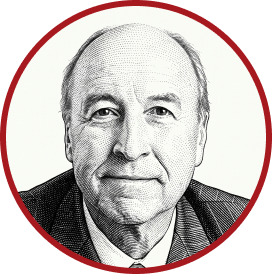
Justin Dyer
dean of the School of Civic Leadership and a scholar of natural law, American constitutionalism, and the Christian origins of American political thought. His leadership of the SCL combines serious academic credentials with a coherent institutional vision.

Devin Stauffer
an accomplished Plato scholar teaching ancient and early modern political thought, affiliated with both the Government department and the Thomas Jefferson Center.

Maurizio Viroli
a prominent Italian political theorist in the Govenrment department and one of the world’s leading scholars of Machiavelli and classical republicanism, affiliated with the TJC. He served as cultural advisor to the Italian president from 1999 to 2006 and has written widely on Machiavelli, Rousseau, patriotism, and the art of citizenship.
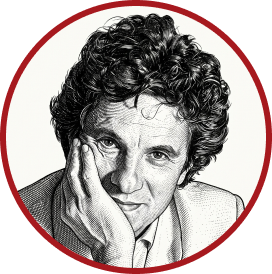
Alexander Duff
a historian of political thought and political rhetoric with a commitment to civic education and Western civilization. He has written on Heidegger, Machiavelli’s republicanism, and Leo Strauss, and has been instrumental in shaping the School of Civic Leadership’s curriculum.

John Rumrich
the standout figure in UT Austin’s English department, a prominent Milton and Shakespeare scholar affiliated with the TJC who regularly teaches Milton to undergraduates.

Sheena Chestnut Greitens
affiliated faculty at the SCL and an expert on American national security in East Asia and the grand strategy of China. Dr. Chestnut Greitens has written on authoritarian regimes and their methods of control, particularly in North Korea and China, and was a fellow at AEI.

Ryan Streeter
executive director of the Civitas Institute, with leadership experience in education, technology, housing policy, and poverty research. He was a policy advisor to President George W. Bush and director for policy studies at AEI.
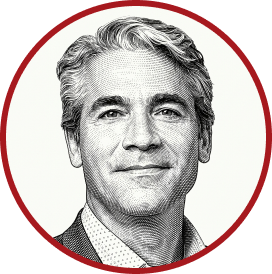
Michael Zuckert
a Distinguished Visiting Professor, he has for decades been one of America’s foremost scholars of political philosophy, and has worked extensively on American political thought. He is currently teaching a course on Thomas Jefferson and the Declaration of Independence.
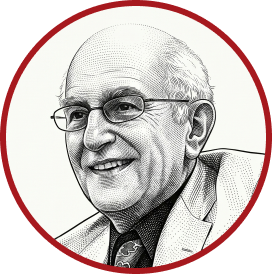
Robert Kaplan
Distinguished Senior Lecturer, Kaplan has served as a member of the Pentagon’s Defense Policy Board and the U.S. Navy’s Executive Panel. At UT Austin, Kaplan teaches “Great Thinkers in Realism and Geopolitics” through the School of Civic Leadership.
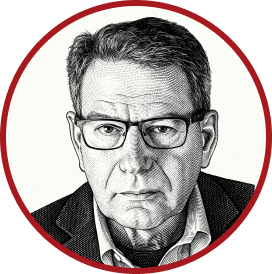
Jewish Life & Israel Engagement
How strong is Jewish life on campus — including religious community, rabbinic leadership, kosher infrastructure, and pro-Israel engagement?
Jewish campus life at UT Austin is active and growing, organized primarily around three institutions: Texas Hillel, the Chabad Jewish Student Center, and Olami. The community is warmly pro-Israel in disposition, with strong student advocacy culture and a supportive administration. The principal practical limitations are the absence of an eruv near campus and thin kosher dining infrastructure.
Chabad
- Leadership: Rabbi Zev and Ariela Johnson run the Chabad Jewish Student Center just off campus. Rabbi Zev is a UT alumnus who returned after ordination at the Rabbinical College of America and the Mayanot Institute in Jerusalem. Chabad provides a regular Shabbat minyan and hosts large, well-attended events throughout the year. Orthodox attendance has grown in recent years, partly attributable to the absence of a full-time Orthodox staff rabbi at Hillel. Rabbi Johnson’s cultivation of ties with Greek organizations broadens participation but results in programming that is less traditionally oriented.
Texas Hillel
- Leadership: Rabbi Stephanie Max, ordained in 2019 from Hebrew College, serves as executive director and primary rabbinic authority. She has articulated a deliberate commitment to Orthodox student engagement and has undertaken measures to broaden access to Jewish life, including exploratory discussions about kosher café integration and a more robust partnership with the university’s dining system. These initiatives remain in development; current on-campus kosher options are limited to grab-and-go meals. Notably, when Rabbi Max proposed a kosher food option, the university implemented it within two weeks, indicating institutional willingness to move quickly where student demand exists.
- Programming: Texas Hillel’s political orientation is more balanced than many Hillels nationally. Students report a positive experience, and Hillel’s explicit outreach to Orthodox students is a meaningful distinction from the national Hillel trend.
Olami
- Leadership: Rabbi Moshe Trepp (a British rabbi who studied at Mir Yeshiva in Jerusalem) and Rebbetzin Faigy Trepp lead the organization, with Rabbi Efraim and Reena Abrahams serving part-time. Rabbi Trepp maintains a presence in Austin primarily on weekends. As of Fall 2025, Olami established a daily shacharit minyan on campus, filling a longstanding gap for observant students. Olami attracts students across the observance spectrum and sponsors Israel trips.
Religious Infrastructure
- Kosher Dining: Limited to grab-and-go meals at one campus location. Students typically supplement with nearby Trader Joe’s or HEB. The gap reflects lack of demand rather than institutional resistance as the university responded to a kosher food proposal within two weeks.
- Daily Minyan: A daily shacharit minyan, hosted by Olami, was established Fall 2025. Before that, no regular on-campus morning services existed outside of Shabbat.
- Eruv: No eruv near campus. Orthodox communities are concentrated in the Northwest Hills neighborhood, a shuttle ride from campus. Observant undergraduates may choose to live there rather than in university housing.
- Study Abroad in Israel: Available through university partnerships with multiple Israeli institutions across disciplines.
Pro-Israel Engagement
- The student culture at UT Austin is warmly pro-Israel by the standards of major American research universities, aided by a supportive administration. Student advocacy organizations are active and have received backing from the university in conflicts with anti-Israel protest activity. The developing Tikvah campus chapter, anchored by the Rosenthal-Levy program, will provide more structured pro-Israel intellectual engagement as it matures.
Campus Clubs & Intellectual Culture
What intellectually serious clubs, publications, and organizations exist outside of the formal curriculum?
UT Austin’s conservative and intellectually serious extracurricular landscape is less developed than its curricular one, but several organizations provide meaningful venues for engagement outside the classroom. The School of Civic Leadership itself has begun to function as an extracurricular hub, connecting students to visiting scholars, policy professionals, and intellectual communities.
- Alexander Hamilton Society (AHS) — UT Austin Chapter
- The Alexander Hamilton Society has an active chapter at UT Austin, dedicated to constructive debate on foreign policy, economic, and national security issues. AHS connects students to careers in foreign policy, national security, and public affairs through a national network of campus chapters and professional alumni.
- Young Conservatives of Texas (YCT) — UT Austin Chapter
- Young Conservatives of Texas, founded in 1980 as a breakaway from Young Americans for Freedom, is a Texas-specific conservative organization with one of its most prominent chapters at UT Austin. Organized under the motto “Principles over Party,” the UT chapter meets regularly on campus. Unlike national conservative organizations, YCT is specifically rooted in Texas political culture and has historically been the more institutionally serious conservative presence at UT—less performative than Turning Point USA, more focused on policy advocacy and campus governance.
- Thomas Jefferson Center
- The TJC offers a number of extracurricular options. The program hosts a Civil Discourse Debates Series on weeknight evenings, inviting students to engage each other over controversial topics in a peaceful and structured environment. They also host a number of lectures and study groups. For students who are enrolled in the Thomas Jefferson scholars program, there are further options for cultural outings in Austin and ongoing reading groups with faculty members.
- The Civitas Institute
- This is the SCL’s internal think tank, with its own journal and events focused on American civics, free speech, the good life, and economic dynamism.
- Civics Law & Policy Society
- The CLPS hosts lectures featuring distinguished legal scholars; forums for debate about law, ethics, and social justice; and service-based learning projects throughout the year.
- The School of Civic Leadership
- Beyond its formal curricular offerings, the SCL has begun to organize a community of students and visiting scholars that functions much like a social and intellectual network. Visiting fellows, policy events, and reading groups affiliated with the SCL and the TJC together constitute a rich extracurricular intellectual environment.
- Tikvah Alumni
- UT Austin does not yet have a large Tikvah alumni network, but the Rosenthal-Levy Scholars Program ought to change that significantly in the coming years. Current alumni include:
- Daniel Samet — PhD, ’24. Jeane Kirkpatrick Fellow at the American Enterprise Institute, focused on US-Israel relations and Middle East policy. His book, U.S. Defense Policy toward Israel: A Cold War History, traces the strategic interests that shaped American policy toward Israel across five administrations. His writing has appeared in Commentary, the Wall Street Journal, National Interest, and National Review, among others.
- Daniel Kane — ’18. Tikvah Krauthammer Fellow and Publius Fellow at the Claremont Institute before working at AEI and the Texas Legislative Council. He has since made aliyah and works for Tikvah directing curricular development at the Lobel Center for Classical Jewish Education in Israel.
- Michael Leff — Current doctoral student in Middle Eastern Studies, studying the Ancient Near East, and a former Tikvah Beren Summer Fellow. He teaches a course on the Bible for the Thomas Jefferson Center.
Antisemitism & Anti-Zionism
How strong are anti-Semitic and anti-Zionist groups and activities on campus? Are there prominent faculty that advance ideas that are actively hostile to Israel and the Jewish people?
UT Austin’s response to October 7 and the campus unrest that followed was among the more decisive at any major American university, shaped in part by a state government willing to make enforcement a political priority. The university did not escape the wave of protests that swept American campuses in spring 2024, but it resolved them more firmly and quickly than most peers.
The Immediate Sequence of Events
- On October 8, the Texas Hillel building was vandalized with anti-Semitic graffiti—one of the earliest explicitly anti-Semitic incidents at UT following the attack. The Texas Muslim Students Association issued a statement on October 10 expressing solidarity with Palestinians and condemning Israeli military actions, without addressing the Hamas massacre.
- In November 2023, the university dismissed two teaching assistants for circulating a letter to students criticizing the university’s “silence” on Palestinian rights, recommending mental health services in terms that implied moral equivalence the university found professionally inappropriate. The letter was written in conjunction with Professor Lauren Gulbas.
- On December 8, students entered Dean Allen Cole’s office to deliver a list of demands. Four students were sanctioned and threatened with expulsion for entering a locked building and refusing to allow Cole to leave.
- On March 18, 2024, the Hillel building was vandalized a second time with “Free Palestine” messages and accusations of genocide. In February 2024, an Israeli flag was burned outside a restaurant while Jewish fraternity members were inside.
- On April 24, the Palestinian Solidarity Committee initiated a walkout and sit-in, invoking the Columbia encampment model. President Jay Hartzell requested Austin Police and Texas Department of Public Safety support; 57 were arrested. The following day, more than 1,000 students and faculty protested outside administrative buildings, with over 500 faculty signing a no-confidence petition in Hartzell.
- On April 29, a surprise encampment was attempted. State police arrived, dismantled it, and arrested 79 individuals, 78 of whom were charged with criminal trespassing.
The University’s Official Response
Then-President Jay Hartzell’s response was notably firmer than that of many peer institution presidents. He called in state law enforcement without extended negotiation, accepted the political cost of mass arrests, and maintained the university’s position throughout weeks of faculty opposition. The administration’s stance was materially strengthened by Governor Abbott’s intervention: Abbott ordered universities to discipline students for anti-Semitism, directed adoption of the IHRA definition of anti-Semitism, and made the state’s own enforcement capacity available to campus police.
Faculty Involvement
165 faculty signed a letter condemning the university’s response to the April 24 protest. More than 500 had signed the no-confidence petition in Hartzell. A faculty strike was announced in solidarity with protesters. The faculty strike at UT Austin did not involve arrests, and the administration held its position throughout.
Has the University Changed?
The legislative and administrative aftermath has been substantial. Texas SB 2972, signed by Abbott, gives regents authority to designate campus protest zones, replacing the prior policy that opened all common outdoor areas to protest. New regulations include a ban on demonstrations between 10 PM and 8 AM and during the final two weeks of the semester, a prohibition against masking and encampments, and have contributed to a markedly quieter campus since spring 2024.
At the institutional level, UT Austin’s DEI apparatus has been substantially dismantled under Texas law, with DEI employees removed and diversity statement requirements in job listings eliminated. The university has adopted institutional neutrality and formally rejected BDS demands. These changes represent a structural shift, not merely a response to individual incidents, and they distinguish UT Austin meaningfully from peer institutions that returned to pre-October 7 norms after the encampments subsided.
While UT Austin has an enormous faculty body, including many who self-describe as Marxists and members of other branches of radical-left, the campus has for a long time been a bastion of serious liberal arts education. The current state and administrative governance have continued to aggressively reaffirm those commitments through investment and development in classical liberal arts and civic education on campus.
National Rankings
How does UT Austin perform in various national rankings?
- Manhattan Institute/City Journal — In Fall 2025, the Manhattan Institute/City Journal produced a new system of college rankings assessing schools on intellectual seriousness, cultural sanity, and overall educational value. The MI/City Journal methodology offers cumulative rankings as well as category-specific rankings.
- UT Austin ranks 2nd overall, placing 1st in Educational Experience and 2nd in Leadership Quality. The ranking rewards the university’s civic learning infrastructure: the Thomas Jefferson Center is recognized as an ACTA Oasis of Excellence, and the School of Civic Leadership earns near-perfect marks for Heterodox Infrastructure.
- Texas state law, which stripped the university’s DEI apparatus and directed institutional neutrality, contributes to 1st place in Resistance to Politicization and 3rd in Commitment to Meritocracy.
- UT Austin ranks 11th in Outcomes, with a 7th place finish in Value Added to Career reflecting the strong graduate earnings profile of its alumni.
- UT Austin ranks 61st in Jewish Campus Climate, reflecting the presence of encampment activity and radical faculty and student organizations, which temper an otherwise top-tier performance.
- Wall Street Journal — The WSJ/College Pulse 2026 rankings, which weight outcomes heavily (70% salary and graduation impact), placed UT Austin 49th nationally.
- For the WSJ, UT Austin is not exceptional in any category, but is generally solid across the board.
- ACTA’s “What Will They Learn?” — ACTA grades schools on the strength of their college-wide liberal arts curricula, scoring universities on how many of seven core subjects are required of all undergraduates.
- ACTA awards UT Austin a B+. The university’s robust general education requirements — covering composition, literature, foreign language, U.S. government and history, mathematics, and science — distinguish it from many elite private universities that have abandoned core requirements.
- The Thomas Jefferson Center is recognized as an Oasis of Excellence.
- ADL Campus Antisemitism Report Card — In response to the troubled campus environments in the wake of October 7, the ADL has been grading schools on antisemitism from F to A.
- The ADL gives UT Austin a B. The university received high marks for Jewish life on campus (Hillel, Chabad, Jewish Greek life) and for publicly disclosed administrative actions. The deduction came primarily from the level of hostile anti-Zionist student groups and faculty activity.
- The ADL noted anti-Semitic vandalism incidents in 2024, including the targeting of Hillel in March 2024 and a flag-burning outside a restaurant with Jewish fraternity members inside, while acknowledging that the university has spoken out repeatedly and committed to disciplinary action.
- Effectively, the ADL criteria make it impossible to distinguish between schools with significantly variable administrative responses to antisemitism.
- U.S. News & World Report — UT Austin ranks 30th nationally among all. It is the top-ranked public university in Texas. Its McCombs School of Business ties for 6th nationally in business programs; its Cockrell School of Engineering ties for 10th in undergraduate engineering.
- FIRE — UT Austin ranks 124/261 schools in the 2027 College Free Speech Rankings, up 43 places from 2025, with an overall grade of D-. It holds a “yellow light” spotlight rating, reflecting a mixed policy picture: the university system has adopted institutional neutrality (raising its score) but has also barred drag performances on campus (lowering its score). UT Austin receives F grades for administrative support and political tolerance.
- Forbes — Forbes ranks UT Austin 46th, but has designated UT Austin a “New Ivy” for 2026, the third consecutive year it has earned this designation. The New Ivies list is curated by surveying C-suite executives and hiring managers about which universities they consider alternatives to the Ivy League, alongside data on graduate outcomes. UT Austin’s consistent inclusion reflects the strong career trajectory of its graduates and the growing prestige of its programs in engineering, business, and public policy.


