

The University of Chicago
Admission Rate:
4%
Undergrad Enrollment:
7,569
Jewish Enrollment:
800 (11%)
Tuition:
$97,374
Test Scores:
ACT (34-35), SAT reading (740-780), SAT math (770-800)
Overview
1
Western Civilization & American Civics

2
Jewish & Israel Studies

3
Outstanding Faculty

4
Jewish Life & Israel Engagement

5
Campus Clubs & Intellectual Culture

6
Antisemitism & Anti-Zionism

7
National Rankings


The JNS Campus Report: Our Methodology

This profile is part of the JNS Campus Report, an effort to evaluate American universities according to criteria that truly matter. We assess institutions across seven distinct fields: (1) the depth of their commitment to Western Civilization, American civics, and great books education; (2) the excellence of their teaching in Jewish and Israel Studies; (3) the presence of world-class faculty in the humanities and social sciences; (4) the quality of Jewish life and Israel engagement on campus; (5) conservative and independent intellectual life outside the classroom; (6) the presence and depth of antisemitism and anti-Zionism on campus; and (7) their standing in the national rankings ecosystem.
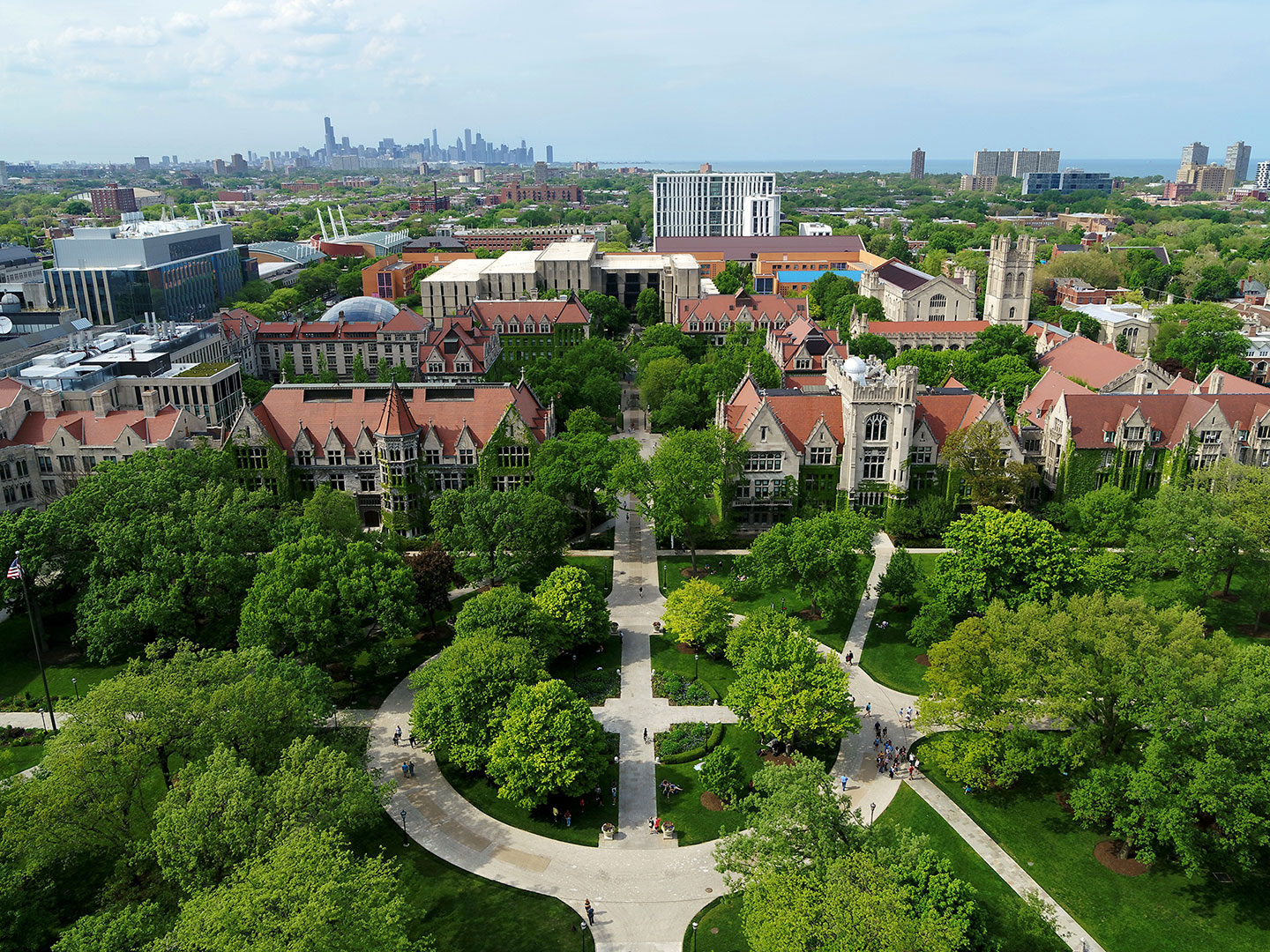
Chicago has held onto intellectual rigor and heterodoxy longer than most of its peers. The Core Curriculum, mandatory since the 1930s, is not as rigorous as it once was, though it is still more rigorous than most of its competitors. While students now have flexibility to take a broad range of qualifying courses rather than a prescribed set, those courses still include serious offerings in the great works of the Western tradition and on classical Jewish civilization.
The Fundamentals concentration offers serious students a more demanding path: seven text-and-author courses, additional language study, supporting coursework, and a three-day examination on six texts, including Paradise Lost, Spinoza, Aquinas, Aristophanes, and Plato’s Republic.
Jewish Studies is mixed. While professors teach Maimonides and medieval Jewish thought, and some have spoken up publicly for Israel and for Zionism after Oct. 7, other faculty in the department did the opposite. The humanities still maintain a number of serious and heterodox faculty.
Chicago serves a somewhat small Jewish community fairly well. There are roughly 800 Jewish students, with 60 to 80 of them observant. All four dining halls carry kosher stations serving hot meals, three meat and one dairy. Because the stations sit inside the general dining halls rather than in Hillel, observant students eat alongside everyone else.
Yavneh, the Orthodox student group, runs services three times daily at Hillel and leads student-run Shabbat services with kiddush and lunch. Rabbi Ariel and Maayan Lavi direct OU-JLIC. The campus falls within the South Side eruv and the university provides Shabbat keys. Hillel lost its rabbi in a pandemic-era downsizing and has not replaced him, though the trajectory under executive director Jen George has been positive.
The university’s handling of the spring 2024 encampment was governed by its own standing commitments: under the Chicago Principles it declined to police the content of speech, its institutional neutrality kept it from taking any political stand on foreign affairs, and it conditioned any negotiation with protestors on dismantlement of the encampment, enforcing those conditions when the organizers refused. The encampment came down on May 7 and was not reconstituted.
Western Civilization & American Civics
Does the University of Chicago have BA programs, honors programs, or a unique school focused on the study of Western Civilization and American civic leadership? Are there exceptional programs or departments in the humanities and social sciences?
The University of Chicago has a strong reputation for intellectual heterodoxy and academic rigor, and one that it has held onto when many other elite universities began to neglect both. It was the home of some of the 20th century’s great theorists, of whom a great number were Jewish, such as Leo Strauss, Allan Bloom, Leon Kass, and Ralph Lerner. While the character of the institution has changed, it still has particular strengths for students looking for excellence in the liberal arts.
- The Core Curriculum began as a mandatory Great Books curriculum in the 1930s and has changed over time to its current format. All students, primarily in the first two years, must take a series of courses—with a number of courses meeting the requirements—in Arts, Humanities, Civilization Studies, Social Sciences, Biological Sciences, Physical Sciences, and Mathematical Sciences. Likewise, students must show competency in a foreign language.
- While students can take a broad range of courses to satisfy Core requirements, that range includes courses that cover some of the great works and ideas of Western Civilization, as well as a course on classical Jewish Civilization.
- The Fundamentals concentration is a liberal arts major that students apply to in the Autumn of their second year. Students in the program take seven text/author courses, alongside additional foreign language study and courses giving supporting context to the text/author courses. At the end of the program, students must pass an examination over three days on six of the texts that they’ve studied over the course of the concentration.
- While students are required to apply focused study to serious texts, there are many to choose from and students shape their own Fundamentals concentration according to their interests. Some offerings include Paradise Lost, Rousseau, the Bible, Spinoza, Aquinas, Shakespeare, Aristophanes, Plato’s Republic, and Machiavelli.
Jewish & Israel Studies
Does the University of Chicago have excellent professors, courses, or programs on Jewish thought and civilization and on Israel and the modern Middle East?
Like most Jewish Studies programs, Chicago is a mixed bag. It hosts, alongside faculty who are openly hostile to Zionism and who have written about Israel as a genocidal state, professors who teach Jewish civilization and thought and the Hebrew Bible without any overt animus towards the Jewish state:
James Theodore Robinson
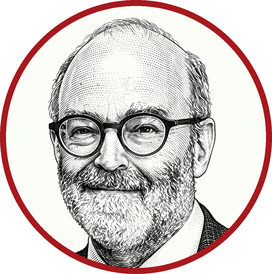
Professor Robinson is the Dean of the Divinity School, who teaches on the history of Judaism, with a particular emphasis on Medieval Jewish thought. In recent years he has taught Maimonides’s Guide for the Perplexed as well as the history of Jews in the Middle Ages. In August 2026, Robinson gave a tour at the galleries of the National Library of Israel.
Simeon Chavel
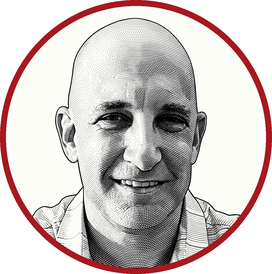
A professor of the Hebrew Bible in the Divinity School, Professor Chavel teaches on the history and ideas of the Hebrew Bible and on the history of ancient Israel and Judea. In the wake of October 7, and when some of his colleagues were denouncing Israel, Chavel made public statements in support of Israel and the need for Zionism.
Outstanding Faculty
Does the University of Chicago have world-class faculty in the humanities and social sciences?
Chicago’s Core Curriculum, and the breadth of its Fundamentals concentration mean that there are a number of excellent professors covering a range of topics. Some include:
Nathan Tarcov
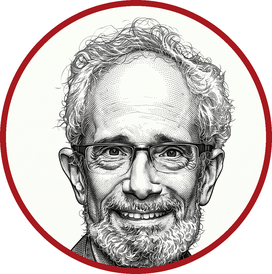
Professor Emeritus in political science, Tarcov continues to teach regular courses on campus. Recently, he has taught on Aristophanes’s comedies and Plato’s Laws. One of the eminent political theorists, he has taught and written on ancient and modern political thought, the American founding, and much else.
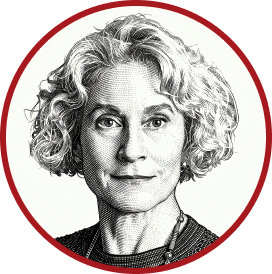
Martha Nussbaum
One of the foremost academics on ethical philosophy, Nussbaum has been an eminent and at times controversial thinker. She has written extensively on Aristotle, justice, and much more.
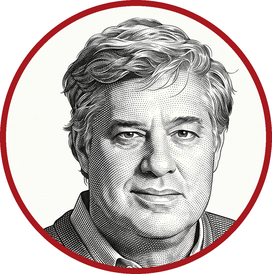
Irad Kimhi
An unusual professor who is recognized for his original thinking, but who has very little published work, Kimhi teaches courses on topics as wide ranging as the philosophy Wittgenstein and on the philosophical, midrashic, and mystical readings of Genesis, and more between. His Genesis course relied on Midrash, Rashi, and Maimonides.
Jewish Life & Israel Engagement
How strong is Jewish life on campus — including religious community, rabbinic leadership, kosher infrastructure, and pro-Israel engagement?
Chabad
Two Chabad couples serve the campus: Rabbi Yossi and Baila Brackman with the undergraduates, and Rabbi Mendel and Mussie Rapoport with the graduate students.
- Programming: Both couples host Shabbat meals at their homes. Chabad runs multi-week structured courses and offers a LivingLinks trip to Poland in spring 2026. Mezuzot can be borrowed free from the Rohr Chabad Center.
- Services: Chabad holds its own Friday night and Shabbat day services, though most Orthodox students attend the Yavneh services at Hillel.
UChicago Hillel
Hillel downsized its staff around the pandemic and the infrastructure for Jewish students suffered as a result. The trajectory since has been positive.
- Leadership: The Hillel rabbi was let go during the downsizing. Jen George now serves as executive director and is well liked across the community and supportive of both Orthodox and non-Orthodox students.
- Shabbat: Friday night draws between 60 and 100 students.
Yavneh
Yavneh is the Orthodox student organization and the center of observant religious life.
- Davening: Yavneh hosts minyan three times daily at Hillel and leads Shabbat services there, which are entirely student-led, along with a kiddush and Shabbat lunch.
OU-JLIC
Rav Ariel and Maayan Lavi are the OU-JLIC directors and are well liked by students.
- Relationship to Yavneh: They work closely with Yavneh, and Rav Ariel is regarded as its community rabbi despite the services being student-led.
- Programming: The couple host learning events and shiurim regularly, along with smaller Shabbat meals at their home.
Religious Infrastructure
The University of Chicago has approximately 800 Jewish students, between 60 and 80 of them observant — a small community, but one that is unusually well served relative to its size. The campus environment is welcoming, with observant students integrating easily into general campus social life and those who do not doing so by choice.
- Kosher Dining: All four dining halls have a kosher station serving hot meals, three meat and one dairy, the last added after a student petition. The dairy station serves breakfast daily. Because the stations sit inside the general dining halls rather than in Hillel, observant students eat alongside everyone else. The food is reported to be good and the kosher dining staff receptive to feedback. Two stations are kashered for Pesach.
- Eruv: The campus falls within the South Side Eruv.
- Shabbat Keys: The university provides Shabbat keys to observant students in the dorms.
- Housing: Observant students typically move to apartments with kosher kitchens after their first two years and cook for themselves.
Pro-Israel Engagement
Maroons for Israel, also known as UChicago Friends of Israel, is the principal Israel advocacy group.
- UChicago Kehilla: An Israeli cultural group offering a secular, apolitical space to engage Israeli culture.
- TAMID: Introduces students to Israel’s business and startup community.
- Rhythm and Jews: The Jewish a cappella group.
Campus Clubs & Intellectual Culture
What intellectually serious clubs, publications, and organizations exist outside of the formal curriculum?
- Alexander Hamilton Society — A national debate and lecture society focusing on American foreign policy, the AHS has an active chapter in Chicago.
- Chicago Maroon — The university paper, which has covered campus issues better than many school papers around the country.
- Tikvah Campus Chapter — Tikvah students maintain a chapter for the discussion of the great Jewish and Western ideas.
Antisemitism & Anti-Zionism
How strong are anti-Semitic and anti-Zionist groups and activities on campus? Are there prominent faculty that advance ideas that are actively hostile to Israel and the Jewish people?
The University of Chicago experienced a concentrated but time-limited period of protest activity in spring 2024. Its institutional framework shaped the outcome in both directions. Under the Chicago Principles, vocal activism for the Palestinian cause—including slogans and speakers that other universities moved against—was treated as protected expression and was not systematically curtailed. Under the Kalven Report’s commitment to institutional neutrality, the university could not lend the encampment the institutional endorsement that protesters secured elsewhere. When the administration did enforce, it consistently did so on grounds of disruption, unsanctioned activity, or property damage rather than on the content of the speech.
U Chicago United for Palestine, an offshoot of an existing coalition and led by the campus SJP chapter, erected the encampment on the Main Quad on the morning of April 29, 2024. Security had anticipated an encampment later that week and was unprepared. President Paul Alivisatos committed the same day to protecting demonstrators’ speech rights while warning that the university would intervene if the essential functioning of campus were undermined.
By midweek the administration offered to meet the organizers, conditioned on their agreement to dismantle the encampment. The organizers refused and demanded capitulation first. Negotiations collapsed, and on May 3 Alivisatos announced his intent to dismantle the encampments. The encampment came down in the early hours of May 7, cleared by university police after demonstrators—many of whom had gone home believing the order was a bluff—remained past the midnight deadline. It was not reconstituted. On May 15 faculty held a die-in marking Nakba Day, and on May 17 activists attempted to occupy the Institute of Politics building in imitation of the Hamilton Hall occupation at Columbia, arriving with food and medical supplies and causing property damage. They failed to clear the building of bystanders and were pushed out within roughly half an hour.
Many university administrations negotiated with protestors in order to end the encampments. To their credit, the U Chicago administration conditioned negotiations on dismantlement, and when that was refused the university enforced its rules.
The university withheld the degrees of four graduating students over encampment participation pending resolution through the disciplinary system; the degrees were awarded in August. The convocation was disrupted by a walkout of at least 100 students. New regulations followed, including a prohibition on sleeping outdoors on campus. In October 2024 a protest of roughly 200 students led to physical altercation with officers, with batons and pepper spray used as students locked themselves behind a gate and spray-painted a statue; one student was placed on mandatory leave and charged with battery after kicking a police officer. A commemorative demonstration in April 2025 dissipated without significant incident. SJP remains active.
Faculty involvement was a significant part of the encampment’s support without becoming institutionalized. The campus chapter of Faculty and Staff for Justice in Palestine, which does not disclose its membership, acted as the encampment’s principal liaison—lending public legitimacy, hosting a press conference in support, and issuing statements attacking the university’s negotiating posture.
University of Chicago faculty of concern include, or have recently included:
- Eman Abdelhadi (Assistant Professor, Comparative Human Development)
- A longtime pro-Palestine organizer (and half-sister of Michigan politician Abdul El-Sayed) who helped establish a library within the encampment. The Chicago Maroon reported that, at a socialist conference in July 2025, she referred to her employer as an evil colonial landlord (“like f--- the University of Chicago, it’s evil. Like, you know? It’s a colonial landlord”), and said that she had held disdain for people who worked within its system until the “genocide” convinced her that she had an obligation to put her political energy into organizing at the university. The university opened an investigation into the remarks. She was separately charged in October 2025 with two counts of aggravated battery to a police officer at an anti-ICE protest.
- Alireza Doostdar (Associate Professor of Islamic Studies, Divinity School)
- A member of the Divinity School, Doostdar was arrested during a protest in Novembeer 2023, spoke during the campus Faculty for Justice in Palestine press conference in 2025, and writes in support of the Palestinian cause. In response to a video alleging that an “Iranian hypersonic missile attack” had destroyed an Israeli missile defense system in Tel Aviv, he wrote on X that “At this point the best and only hope for peace is the power and durability of Iranian missiles.”
- His brother was arrested for allegedly operating illegally as a foreign agent of Iran, including allegations that he conducted surveillance of the U Chicago Hillel and the Chabad Center, and eventually sentenced to over 2 years in prison.
- Orit Bashkin (Professor of Modern Middle Eastern History)
- Teaches on Jews in the Middle East, as well as Middle Eastern history, in part through a lens of postcolonial theory. She has been a signatory of statements downplaying anti-Semitism and accusing modern Zionism of having brought about “unjust, enduring, and unsustainable systems of Jewish supremacy, ethnonational segregation, discrimination, and violence. . .”
- Sarah Hammerschlag (Professor of Jewish History)
- Teaches courses on modern Jewish history, and has written about how the most powerful Jewish leaders, in their “prioritization of Jewish lives over others” and their vilification of anyone who disagrees with their “ethnocentric” visions, call to mind the Protocols of the Elders of Zion. She has also written about her shame towards Israel and the American Jews who support it, and her general discomfort at being wished a good Shabbos.
- Kenneth Moss (Professor of Jewish History)
- Teaches courses on Zionism. His scholarly focus includes Israel and Palestine, and he has been quoted saying that “We [American Jews] have to work to show Jews how bad and dangerous the anti-humanist forces in Israeli society are, and that the occupation and Jewish supremacy are corrupting Jews themselves.”
National Rankings
How does the University of Chicago perform in various national rankings?
- Manhattan Institute/City Journal — In Fall 2025, the Manhattan Institute/City Journal produced a new system of college rankings assessing schools on intellectual seriousness, cultural sanity, and overall educational value. The MI/City Journal methodology offers cumulative rankings as well as category-specific rankings.
- U Chicago ranks 32nd overall.
- It ranks 11th in Educational Experience and 16th in Curricular Rigor, reflecting a strong liberal arts curriculum.
- U Chicago ranks 22nd in faculty pluralism and 14th in heterodox infrastructure.
- U Chicago ranks 16th in Leadership Quality, 37th in Commitment to Meritocracy, and 4th in support for free speech—reflecting its consistent approach to intellectual pluralism, open discourse, and institutional neutrality.
- U Chicago ranks 74th for “Jewish Campus Climate.”
- U Chicago ranks 37th in Outcomes. It ranks 51st in “Payback Education Investment” and 42nd in “Value Added to Career.”
- Wall Street Journal — The WSJ rankings weight outcomes heavily (70%), with salary impact (50%) and graduation rate impact (20%) the dominant factors.
- U Chicago is currently 30th in WSJ rankings. It takes a middling score across the board on salary impact and graduation rate, as well as on diversity and its survey results.
- ACTA’s “What Will They Learn?” — ACTA grades schools on the strength of their college-wide liberal arts curricula, scoring universities on how many of seven core subjects are required of all undergraduates.
- U Chicago earns a B. Of the seven core subject areas, U Chicago requires four: composition, literature, math, and science. ACTA also highlights schools that have taken on the Chicago Principles on Freedom of Expression, which were first adopted by U Chicago with many other institutions following suit.
- ADL Campus Antisemitism Report Card — In response to the troubled campus environments in the wake of October 7, the ADL has been grading schools on antisemitism from F to A.
- ADL gives U Chicago a C (marked as an improvement). U Chicago receives the highest possible scores in publicly disclosed administrative actions (above expectations) and in Jewish life on campus (excellent), while receiving the worst possible score in campus conduct and climate concerns (high).
- U Chicago gets green marks for the most part in administrative actions and Jewish life, but takes high alerts for anti-Semitic and anti-Zionist incidents and activity.
- U.S. News & World Report — U Chicago is 6th in the USNWR national university rankings.
- FIRE — The Foundation for Individual Rights and Expression ranks U Chicago 1/261 on free speech, up 2 places from 2025. U Chicago receives an overall grade of B-, with a “green” spotlight rating, and a C- and an F for administrative support and political tolerance, respectively.
- Forbes — U Chicago is 13th on the Forbes list, reflecting high median salaries, high graduation rates, and the number of U Chicago graduates in prominent positions across various fields.


