

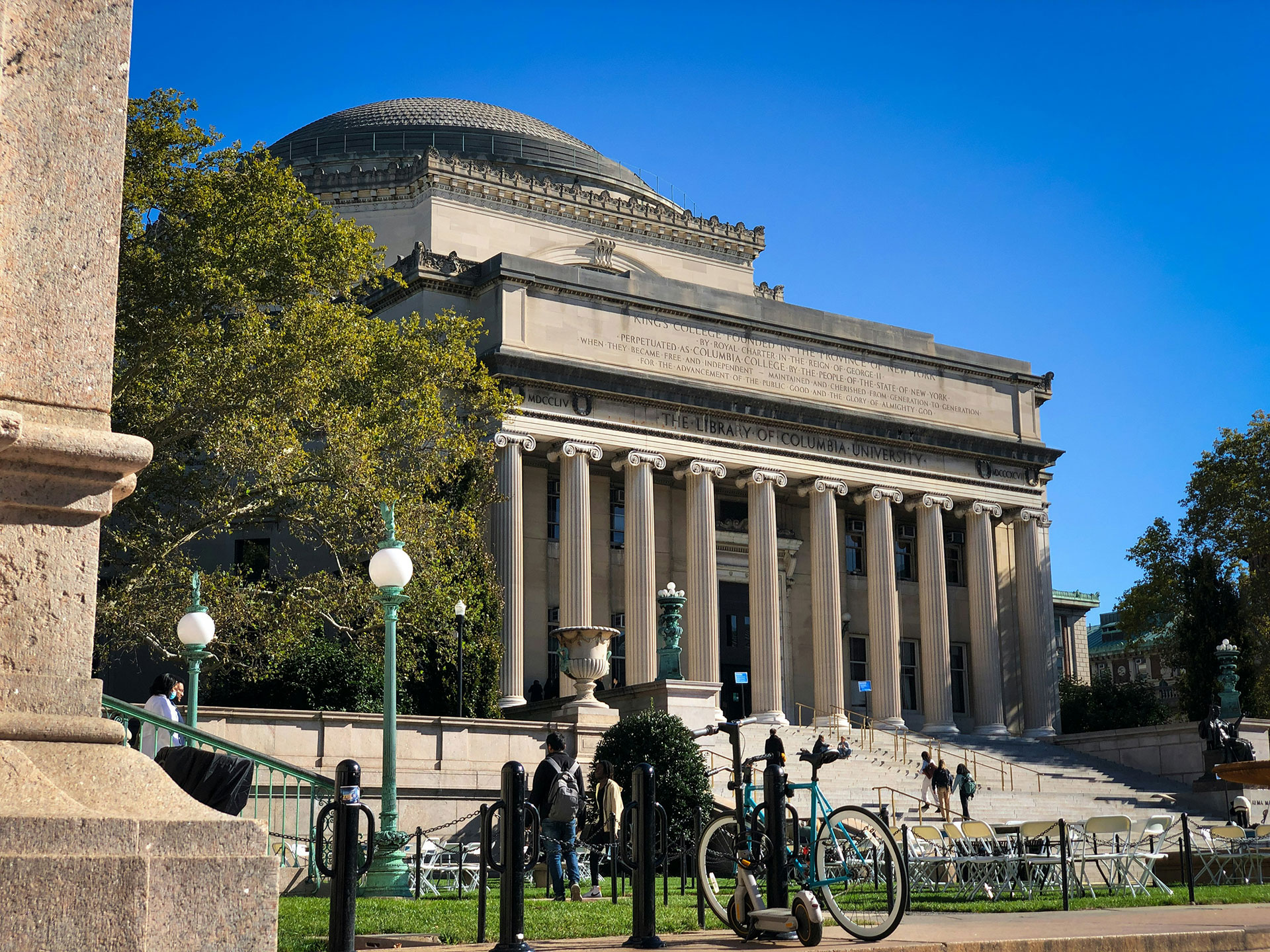
Columbia University
Admission Rate:
4%
Undergrad Enrollment:
8,973 students
Jewish Enrollment:
1,400 (16%)
Tuition:
$92,450
Test Scores:
ACT (34-35), SAT reading (740-780), SAT math (770-800)
Overview
1
Western Civilization & American Civics

2
Jewish & Israel Studies

3
Outstanding Faculty

4
Jewish Life & Israel Engagement

5
Campus Clubs & Intellectual Culture

6
Antisemitism & Anti-Zionism

7
National Rankings


The JNS Campus Report: Our Methodology

This profile is part of the JNS Campus Report, an effort to evaluate American universities according to criteria that truly matter. We assess institutions across seven distinct fields: (1) the depth of their commitment to Western Civilization, American civics, and great books education; (2) the excellence of their teaching in Jewish and Israel Studies; (3) the presence of world-class faculty in the humanities and social sciences; (4) the quality of Jewish life and Israel engagement on campus; (5) conservative and independent intellectual life outside the classroom; (6) the presence and depth of antisemitism and anti-Zionism on campus; and (7) their standing in the national rankings ecosystem.
Columbia is famous for its Core Curriculum, a kind of Great Books programming. Nearly every undergraduate completes the Core Curriculum, but it is uneven and strongly biased toward contemporary critical studies.
The Center for American Studies is where the exceptions to a fairly radical humanities faculty are concentrated. Jewish and Israel studies are extensive, with students able to participate in a joint program with the Jewish Theological Seminary.
At the same time, Columbia is home to one of the premier Palestine Studies programs, and has a long tradition of extreme faculty hostility to Israel.
While the political atmosphere has become notoriously hostile since Oct. 7, observant Jewish life at Columbia is easier than at most schools—thanks to a large Jewish population and its presence in one of the world’s most Jewish cities. Hillel counts roughly 1,500 Jewish undergraduates, with 150 to 200 being Orthodox or Orthodox-adjacent, according to student reports. Yavneh runs minyanim daily, and Hewitt Dining serves hot kosher food with separate meat and dairy kitchens. The campus sits inside the New York eruv, and large Jewish communities in the city offer a robust Jewish life for students. Rabbi Yonah Hain has been campus rabbi since 2007, and Rabbi Yuda and Naomi Drizin’s Chabad draws large numbers of students on Friday nights.
In contrast, 33 student organizations signed statements placing sole responsibility for Oct. 7 on Israel, the South Lawn encampment protest gave way to the occupation of Hamilton Hall, and very few students were disciplined for any of it. The federal settlement has since produced structural change—public safety officers with arrest powers, and disciplinary authority moved out of the university senate and into the central administration—whose long-term effect remains to be seen.
Western Civilization & American Civics
Does Columbia have BA programs, honors programs, or a unique school focused on the study of Western Civilization and American civic leadership? Are there exceptional programs or departments in the humanities and social sciences?
- Columbia does not have a full-scale degree-granting program or dedicated faculty focused on the study of Western Civilization or American civics. Columbia has one of the most famous, required “great books” programs in American higher education, the Core Curriculum. Nearly every undergraduate completes the Core Curriculum, a set of courses in literature, philosophy, art, music, and science that the university has promoted for a century as “the defining element of a Columbia College education.” As a required curriculum organized around the Western tradition, it is the strongest general ed requirement in the Ivy League, though the content itself is not without problems.
- The Core Curriculum began as a progressive experiment built less to transmit a tradition than to give students, in the university’s words, “a space to develop their own ideas and create knowledge collectively at the intersection of historical consciousness and self-awareness.” That orientation has since become something closer to suspicion of the material. After 2020, the Core committee revised the curriculum in explicitly political terms, casting the revision as a response to the “nationwide reckoning with anti-Black racism,” and seeking to insert race as a subject into all of the sequences, from Literature Humanities, to Art Humanities, to Frontiers of Science. The curriculum itself is made up of several sequences, including:
- Contemporary Civilization, the two-semester sequence that comes closest to a Western Civ survey, states its aim on its own syllabus: the point “is not to endorse or celebrate the often conflicting ideas of the authors studied in class, but rather to engage with them critically.” The fall term still moves through major ancient and modern philosophers, but it leaves out all of the Hebrew Bible save for Exodus (the literature curriculum reads Genesis), set beside a small section of the New Testament, the Quran, and a full unit on the conquest of the Americas; the spring gives over the majority of its programming to anticolonialism, race, gender, sexuality, and climate justice. Its Revolutions and Rights unit spends more time on Haiti than on the United States, including two Haitian constitutions but not the complete U.S. Constitution.
- Literature Humanities covers ancient and modern literary works (including parts of both the Hebrew Bible and New Testament explicitly as literature). The ancient list includes Sappho but not Sophocles, Genesis but no other Hebrew scripture, and a Sumerian hymn attributed to a high priestess, while the modern term is thin and weighted toward women writers.
- Art Humanities, revised in 2020 for the first time since 1947, is not much of a survey: ancient art reduces to one unit on the Parthenon, a single cathedral is studied beside a mosque, and the span from the Renaissance to the Dutch masters covers seven artists, and the late eighteenth through twentieth centuries consume half the course.
- University Writing, which replaced the old rhetoric requirement, is no longer a common course at all but a menu of themed sections—including Gender and Sexuality, Climate Humanities, and Race and Ethnicity—with student writing going into a journal that has recently published essays on colonialism in America and the dangers of air conditioning.
- The Center for American Studies has been and continues to be a place to find excellent faculty that might otherwise be difficult to locate. It is not a civics institute, but it does offer courses that aim to explain aspects of America through the study of great works and authors without relying on hostile critical frameworks.
- A determined student can assemble a partial liberal arts education from these options—important texts remain on the lists—but must do so against the grain of the program rather than with its help, and would need to devote extra credits to filling out the gaps left by the Core’s biases.
Jewish & Israel Studies
Does Columbia have excellent professors, courses, or programs on Jewish thought and civilization and on Israel and the modern Middle East?
Columbia’s Jewish Studies and Israel-related academic offerings are extensive, though they include faculty whose relationship to Israel ranges from supportive to actively hostile. Navigating the department requires care, but the serious student of Jewish civilization and Zionism can find valuable resources here. Especially valuable is that students can dual-degree through the Jewish Theological Seminary, by participating in the Joint Program with the List College at JTS.
Avi Shilon
A Visiting Associate Professor teaching the history of modern Israel and Zionism, who rose to prominence in America when masked protestors stormed his Spring 2025 History of Modern Israel class. His classes on modern Israel have remained popular. His research has included biographies of Menachem Begin and David Ben-Gurion, and he has written for Mosaic Magazine and taught courses for Tikvah.
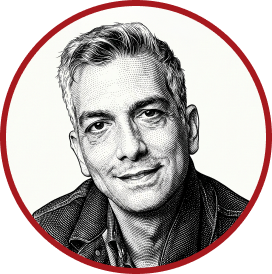
Beth Berkowitz
Very established scholar of rabbinic literature and biblical interpretation, who teaches intro to Judaism among other courses.
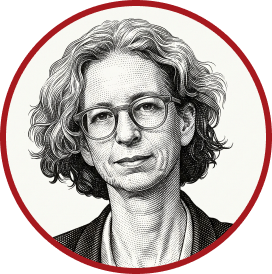
Michael F. Stanislawski
A historian of modern Jewish history and of Russian Jewish history, who has written extensively on Jewish life in Russia, and on Zionism.
Dual Degree Program at Tel Aviv University — Since 2019, Columbia has offered a dual-degree bachelors program with TAU, where students spend two years in Tel Aviv followed by two years at Columbia. Students take a liberal arts core curriculum across both campuses, with classes taught in English.
Outstanding Faculty
Does Columbia have world-class faculty in the humanities and social sciences?
Many of the primary humanities departments at Columbia have adopted political stances or embraced academic trends that conflict with the goals of classical liberal education. While the larger picture is troubled, there are still numerous excellent teachers and scholars spread out among various departments. This includes:
Mark Lilla
Scholar of intellectual history and political theory. Teaches courses on Tocqueville, Rousseau, Pascal, and others. Has been a consistent professor in the Center for American Studies. Comes highly recommended from excellent students in the Tikvah network.
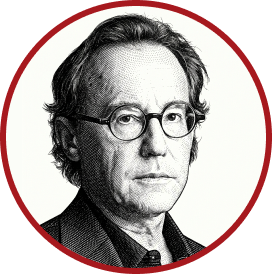
David Yerkes
Yerkes is a scholar of the history of the English language, teaching Middle English and classics.
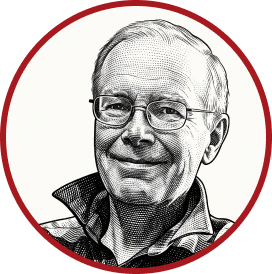
Jeremy Dauber
A historian of Jewish popular culture, and especially Jewish comedy, Dauber is also the current director of the Center for American Studies, and teaches the Intro course in that program.
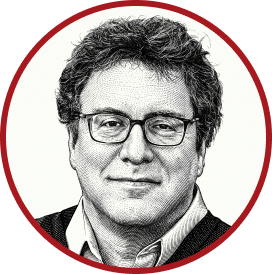
John McWhorter
A linguist by specialty, McWhorter is one of the most incisive commentators on race in America. He currently teaches the evolution of American music in the Center for American Studies.
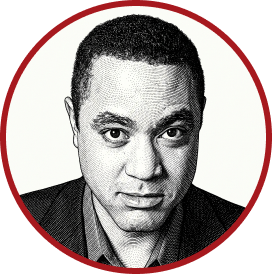
Benjamin E. Rosenberg
A seminar instructor at the Center for American Studies and lecturer in the law school, Rosenberg teaches a recurring course on the Supreme Court in American history.
Jewish Life & Israel Engagement
How strong is Jewish life on campus — including religious community, rabbinic leadership, kosher infrastructure, and pro-Israel engagement?
Chabad
Chabad at Columbia is led by Rabbi Yuda and Naomi Drizin.
- Leadership: The Drizins have served as directors since 2019 and students report that the couple is very well liked on campus.
- Programming: Friday night Shabbat dinner draws a couple hundred students each week. Chabad also runs Sinai Scholars, an eight-week learning program for which participants receive a $350 stipend on completion.
- Student Base: Most of the students who come through Chabad on Friday nights are not Orthodox, making it the principal point of contact between the observant infrastructure and the wider Jewish student body.
Columbia/Barnard Hillel
Hillel operates from a dedicated building on Morningside Heights, is one of the larger campus Hillels in the country, and is deeply embedded in the Orthodox community.
- Leadership: Rabbi Yonah Hain is the campus rabbi for Columbia/Barnard Hillel and has been since 2007. He created the J&Y series of learning fellowships and is faculty at both the Shalom Hartman Institute and YCT Rabbinical School.
- Learning Fellowships: Hillel offers multiple fellowships each semester. The Spring 2026 slate included Judaism & the Morning (morning rituals grounded in wellness, Jewish texts, and practice), Judaism & Space (the scientific and historical aspects of Jews, Judaism, and space), Judaism & Intimacy (sex, intimacy, and the Jewish tradition), Judaism & Israel: iEngage (an apolitical, values-based seminar on Israel), and Judaism & God.
- Affiliated Student Organizations: Hineini, the mental health awareness group; Hillel Sustainability and Climate Action; and Sharsheret, the breast cancer awareness group, all operate under the Hillel umbrella. Kesher (Reform) and Koach (Conservative) serve the non-Orthodox denominational communities alongside Yavneh.
- Israel Programming: Hillel sponsors a Birthright trip during winter break.
- Meor: Meor maintains a presence at Columbia independent of Hillel, offering weekly learning and weekly Shabbat meals open to all students with advance registration.
Yavneh
Yavneh is the Orthodox student organization and the center of observant religious life on campus.
- Davening: Yavneh runs a daily minyan for shacharit and for mincha/maariv, making Columbia one of the few Ivy League campuses where observant students can daven on campus every day of the week.
- Shabbat: Yavneh organizes a Shabbat lunch every week.
- Housing: Yavneh offers to help incoming freshmen find Shabbat-observant roommates.
- OU-JLIC: Rav Daniel and Jasmine Peled-Schwartz began as Columbia/Barnard’s OU-JLIC co-directors in fall 2025. Daniel studied at Yeshivat Maale Adumim and Yeshivat Har Etzion, took a degree in philosophy and Arabic at Princeton, and recently received smicha at RIETS. Jasmine also went to Princeton, graduating in computer science and philosophy. They lead classes several nights a week, which primarily draw Yavneh students.
Religious Infrastructure
Despite the notoriously hostile political atmosphere, observant life is easier at Columbia than at most schools, owing to the robust Jewish population and infrastructure. Hillel says that there are roughly 1,500 Jewish undergraduates attending Columbia, of whom students report between 150 and 200 being Orthodox or Orthodox-adjacent.
- Kosher Dining: Hewitt Dining Hall at Barnard offers hot kosher food for breakfast, lunch, and dinner, with both a dairy and a meat kitchen, though lunch is always dairy. John Jay Dining Hall carries prepackaged CIBO meals. Hillel and Chabad both hold Friday night dinner, and Yavneh organizes a Shabbat lunch every week.
- Eruv and Shabbat Keys: The campus is within the NYC eruv, and students can get Shabbos keys.
- Academic Accommodation: Professors are accommodating with extensions and with missed class for the chagim.
- The City as Infrastructure: Because Columbia is in New York City, students live in close proximity to many kosher restaurants, and the density of synagogues in Morningside Heights and on the Upper West Side makes the city itself an extension of the Jewish campus. Many observant upperclassmen live in apartments and host their own Shabbat meals with friends.
Pro-Israel Engagement
- Students Supporting Israel (SSI)
- The Columbia chapter of the national SSI movement. It is an explicitly Zionist group whose mission is to promote pro-Israel messaging on campus.
- Ariyeh
- Columbia’s pro-Israel affairs committee, which engages students with Israel through cultural, academic, political, and philanthropic programming.
- TAMID Group
- TAMID cultivates professional skills among undergraduates through interaction with the Israeli business community. It is a professional rather than an advocacy organization, but it is one of the more durable points of sustained student engagement with Israel.
Campus Clubs & Intellectual Culture
What intellectually serious clubs, publications, and organizations exist outside of the formal curriculum?
- Tikvah
- Columbia’s location in New York City, its large Jewish student population, and the presence of the Tikvah Fund’s main offices nearby create natural conditions for a strong Tikvah presence. Columbia maintains a Tikvah Campus Chapter.
- Alexander Hamilton Society
- The Hamilton Society is a national organization that promotes constructive debate on basic principles and contemporary issues in foreign, economic and national security policies. The Columbia branch was active as of Spring 2026.
Antisemitism & Anti-Zionism
How strong are anti-Semitic and anti-Zionist groups and activities on campus? Are there prominent faculty that advance ideas that are actively hostile to Israel and the Jewish people?
Columbia was, in the months following October 7, 2023, the most visible and consequential test case for how American universities would handle the collision between campus activism and Jewish student safety. The results were, at best, mixed; at worst, a failure of basic institutional duty.
The campus had an extensive documented history of anti-Israel activism dating to the Columbia Unbecoming controversy of 2004, a faculty culture in Middle East Studies that had long normalized hostility to Israel, and an administrative tradition of relying on informal trust rather than enforcement mechanisms to maintain campus order. What followed October 7—33 student organizations signing statements expressing solidarity with Hamas and placing sole responsibility with Israel; the April 2024 encampment on South Lawn; the occupation of Hamilton Hall—was in some ways the predictable culmination of institutional choices made over decades.
President Minouche Shafik’s congressional testimony in December 2023, unlike Claudine Gay’s at Harvard, did not lead to the immediate collapse of her administration. But her administration’s response to the spring 2024 encampment was defined by a combination of initial police clearance (April 18—the day after the encampment was established, police cleared the lawn) followed by a failure to clear the replacement encampment that immediately formed, a prolonged period of negotiation that gave organizers time to occupy Hamilton Hall, and a second, more complicated police clearing that drew national attention. The university made several rule changes regarding protests and antisemitic speech but disciplined very few students for violations.
The Trump administration’s decision to withhold federal funding in 2025 and Columbia’s subsequent federal settlement produced more structural changes: the university hired public safety officers with arrest powers, consolidated disciplinary authority in the central administration and trustees (removing it from the faculty- and student-dominated university senate), and announced policy changes around protests and security. Whether these changes prove durable is the central question for Columbia’s Jewish campus climate going forward. The university has seen three presidents since the protests began—Shafik, followed by interim president Claire Shipman, and a new president Jennifer Mnookin—and the seriousness of institutional commitment to the new arrangements remains to be tested.
Columbia has long been at the center of the anti-Israel movement in the academy. For decades, Columbia was the professional home of Edward Said and Rashid Khalidi, and it continues to host the Center for Palestine Studies which carries on Said’s legacy. Today, that center continues to host events that accuse Israel of committing a genocide, and which treat it as an occupying settler power.
Columbia faculty of concern include, or have recently included:
- Rashid Khalidi (Edward Said Professor Emeritus of Arab Studies)
- Probably the most famous anti-Israel academic, and the torch bearer of Edward Said’s postcolonial legacy. Scholar of settler colonialism, he ran the Center for Palestine Studies until his retirement in 2024.
- Nadia Abu El-Haj (Professor of Anthropology, Co-Director of the Center for Palestine Studies)
- Much of her scholarly work has been dedicated to discrediting Jewish connections to Israel.
- Brian Boyd (Senior Lecturer in Anthropology, Co-Director of Palestine Studies)
- Longtime BDS supporter and anti-Israel advocate in academia, who has co-authored calls for Anthropologists to boycott Israeli academics.
- Joseph Massad (Middle Eastern studies)
- Gained national infamy for calling the October 7 attacks “awesome” in an op-ed for the Electronic Intifada on October 8, 2023. In the same piece, he referred to the Palestinian Authority as a “collaborator,” and called the U.S. the Palestinian people’s greatest enemy. He makes a hopeful statement that “the colonists’ flight from these settlements may prove to be a permanent exodus. They may have finally realized that living on land stolen from another people will never make them safe.”
- According to reporting in the Washington Free Beacon, Massad asserted on a March 2024 podcast that “the idea that European Jews are somehow direct descendants of the ancient Hebrews is, of course, a bogus claim.” “What is special here about Zionism is not only the invention of ancient Israel and the invention of Jews as descendants of the ancient Hebrews, it’s almost like a Hitlerian project to speak of Jews genetically in this fashion,” Massad added.
- Despite these extreme views and his long history of anti-Zionist feeling, Massad has taught the Israel-Palestine conflict for decades, and continued to teach on modern Israel, as recently as Spring 2025 when he taught a class on “Palestinian and Israeli Politics and Societies.”
- Bruce Robbins (Professor in English, and affiliate faculty at Center for Palestine Studies)
- Longtime BDS advocate, for whom Palestine has been a central issue for decades. During the 2024 encampments, Robbins reportedly taught a class within the encampment.
National Rankings
How does Columbia perform in various national rankings?
- Manhattan Institute/City Journal — In Fall 2025, the Manhattan Institute/City Journal produced a new system of college rankings assessing schools on intellectual seriousness, cultural sanity, and overall educational value. The MI/City Journal methodology offers cumulative rankings as well as category-specific rankings.
- Columbia ranks 34th overall.
- It ranks 9th in Educational Experience and 3rd in Curricular Rigor, reflecting a high score for Columbia’s Common Core program as a required liberal arts curriculum.
- Columbia ranks 9th in Heterodox Infrastructure. Part of this score reflects ACTA’s outdated listing of the now-defunct Center on Law and Liberty as an Oasis of Excellence.
- Columbia ranks 59th in Leadership Quality, 88th in Commitment to Meritocracy, and 30th in Resistance to Politicization—reflecting its large DEI bureaucracy and activist institutional commitments.
- Columbia ranks 91st for “Jewish Campus Climate.”
- Columbia ranks 19th in Outcomes, outperforming its overall position. It ranks 6th in “Payback Education Investment” and 21st in “Value Added to Career.”
- Wall Street Journal — The WSJ rankings weight outcomes heavily (70%), with salary impact (50%) and graduation rate impact (20%) the dominant factors.
- Columbia is currently 8th in WSJ rankings. It scores very highly on salary impact and graduation rate, and is brought slightly below the top by poor student survey results.
- ACTA’s “What Will They Learn?” — ACTA grades schools on the strength of their college-wide liberal arts curricula, scoring universities on how many of seven core subjects are required of all undergraduates.
- Columbia earns a B+. Of the seven core subject areas, Columbia requires five: composition,, literature, foreign language, U.S. government and history, and science.
- ACTA credits the now-defunct Center on Law and Liberty as an “Oasis of Excellence.”
- ADL Campus Antisemitism Report Card — In response to the troubled campus environments in the wake of October 7, the ADL has been grading schools on antisemitism from F to A.
- ADL gives Columbia a C (marked as an improvement). Columbia receives the highest possible scores in publicly disclosed administrative actions (above expectations) and in Jewish life on campus (excellent), while receiving the worst possible score in campus conduct and climate concerns (high).
- Columbia gets perfect marks for administrative actions and Jewish life on campus, while also finding alarming levels of anti-Semitism and anti-Zionism on campus from students, staff, and faculty. Effectively, the ADL criteria make it impossible to distinguish between schools with significantly variable administrative responses to antisemitism.
- U.S. News & World Report — Columbia is 15th in the USNWR national university rankings.
- FIRE — The Foundation for Individual Rights and Expression ranks Columbia 246/261 on free speech, having fallen only 6 places from 2024. Columbia receives an overall grade of F, with a “yellow” spotlight rating, and F grades for political tolerance and administrative support.
- Forbes — Columbia is 2nd on the Forbes list, reflecting high median salaries, high graduation rates, and the number of Columbia graduates in prominent positions across various fields.


