

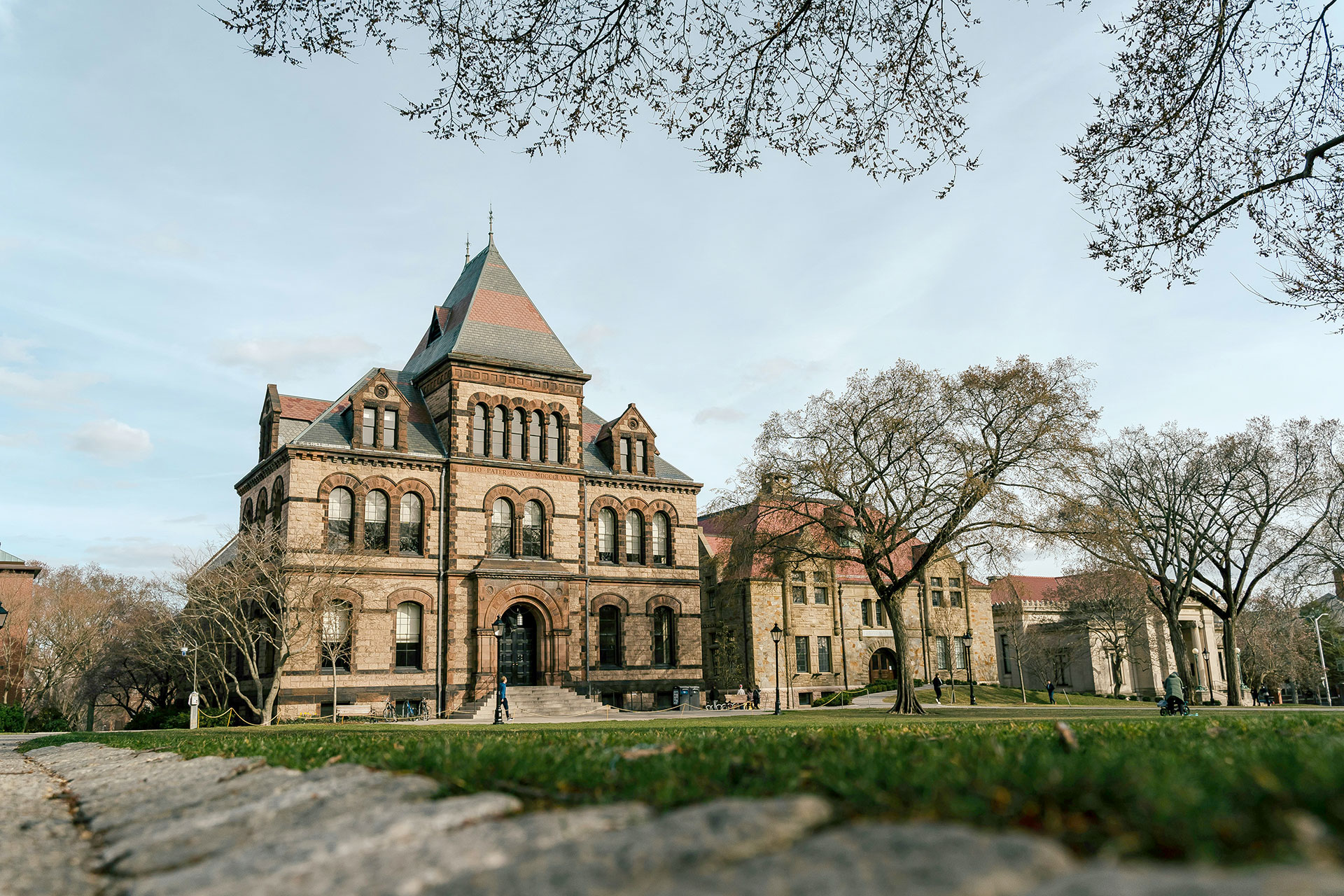
Brown University
Admission Rate:
5%
Undergrad Enrollment:
7,226
Jewish Enrollment:
1,700 (24%)
Tuition:
$90,214
Test Scores:
ACT (34-35), SAT reading (740-780), SAT math (770-800)
Overview
1
Western Civilization & American Civics

2
Jewish & Israel Studies

3
Outstanding Faculty

4
Jewish Life & Israel Engagement

5
Campus Clubs & Intellectual Culture

6
Antisemitism & Anti-Zionism

7
National Rankings


The JNS Campus Report: Our Methodology

This profile is part of the JNS Campus Report, an effort to evaluate American universities according to criteria that truly matter. We assess institutions across seven distinct fields: (1) the depth of their commitment to Western Civilization, American civics, and great books education; (2) the excellence of their teaching in Jewish and Israel Studies; (3) the presence of world-class faculty in the humanities and social sciences; (4) the quality of Jewish life and Israel engagement on campus; (5) conservative and independent intellectual life outside the classroom; (6) the presence and depth of antisemitism and anti-Zionism on campus; and (7) their standing in the national rankings ecosystem.
Brown’s Open Curriculum is the university’s defining academic feature and its central liberal arts problem—students assemble their own course of study with no required encounter with Western tradition, nor any institutional guidance toward this tradition. The one countervailing institution is the Center for Philosophy, Politics, and Economics under David Skarbek, recognized by the American Council of Trustees and Alumni (ACTA) as an Oasis of Excellence. The one countervailing institution is the Center for Philosophy, Politics, and Economics under David Skarbek, recognized by the American Council of Trustees and Alumni (ACTA) as an Oasis of Excellence. The Center offers courses in political economy and the history of economic thought, hosts a journal and a student society, and recently formalized its curriculum into an official concentration (major).
Judaic Studies is small, and a number of its faculty are staunchly anti-Zionist. Some of the academia’s leading anti-Zionist voices are at Brown. While the humanities here lean heavily left, there are some bright spots.
Brown has been courting Jewish students, and observant life at Brown has become robust. Hillel reports about 1,700 Jewish undergraduates, roughly a quarter of the student body, within which is a tight, growing community of 50 to 60 observant students. The Sharpe Refectory houses a Star-K certified kosher kitchen with separate meat and dairy sides, included in the regular meal plan. Students run daily Orthodox services. The campus falls within the Providence eruv; and Shabbat observant students can request a residence hall with a Sabbath door. Hillel has just hired Rabbi Yair Lichtman, ordained at Yeshiva University, specifically to serve the growing Orthodox population.
The administration’s handling of the April 2024 encampment went the other way. It negotiated with students rather than resisting, and its April 2024 agreement with protestors turned the occupation of the Main Green into a formal hearing before five members of the Brown Corporation, with an assurance that no one would face suspension or expulsion for participation alone.
Federal pressure has since become a prevailing issue on campus, including a settlement requiring third-party monitoring of the university’s treatment of its Jewish students.
Western Civilization & American Civics
Does Brown have BA programs, honors programs, or a unique school focused on the study of Western Civilization and American civic leadership? Are there exceptional programs or departments in the humanities and social sciences?
- Brown has no program, school, or academic unit dedicated to Western civilization or American civics, and it has no general education requirements of any kind. The Open Curriculum is the university’s defining academic feature and its central liberal-arts problem: students assemble their own course of study with no required encounter with the Western tradition, and no institutional structure exists to guide them toward one. Brown does offer a program in Philosophy, Politics, and Economics (PPE), through the Center for Philosophy, Politics, and Economics.
- The Center for Philosophy, Politics, and Economics is a research center run by Professor David Skarbek, that aims to support research and teaching on values, institutions, and incentives in society.
- The Center for PPE aims to bring together an intellectually diverse set of faculty, and offers a set of courses on political economy, the history of economic thought, and other topics within the PPE umbrella. There is currently no sign of a PPE major or minor, or even a certificate on offer.
- The Center for PPE hosts various events and lectures, and is also home to an academic journal, a student society—the Philosophy, Politics & Economics Society—and a student-run political journal—the Brown Political Review.
Jewish & Israel Studies
Does Brown have excellent professors, courses, or programs on Jewish thought and civilization and on Israel and the modern Middle East?
Brown’s Judaic Studies department is small, with roughly eight faculty on the directory. Students in the concentration take ten courses, of which two are modern Hebrew.
Michael Satlow
A scholar of Judaism in antiquity, but who teaches courses more broadly on early Judaism and Jewish ethics, including regular courses on Talmud, “Great Jewish Books,” Mishnah, and the history of the Bible.
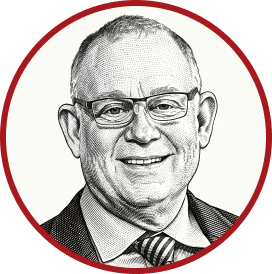
Saul Olyan
Historian of Ancient Judaism, teaches courses on war and peace in the Hebrew Bible, the history of biblical interpretation, and biblical literature up until the Second Temple period. He also teaches advanced courses on Aramaic texts and seminars requiring advanced Hebrew knowledge.
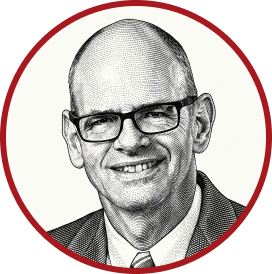
Study abroad in Israel is available through five programs: Tel Aviv University, Hebrew University, Ben Gurion University, the Technion, and the Arava Institute for Environmental Studies. Currently, Brown is strongly recommending that students defer any Brown-related travel to Israel.
Outstanding Faculty
Does Brown have world-class faculty in the humanities and social sciences?
Brown’s humanities faculty leans heavily to the left
Sharon Krause
is an eminent political theorist and scholar of the work of Montesquieu. She teaches courses on the history of political thought, as well as on the political aspects of the human relationship to nature.

Philip Gould
teaches nineteenth-century American literature, including Melville, Twain, and Poe, along with Lincoln and courses on the Revolution and the early American nation. He teaches the American literary canon on its own terms.

Jewish Life & Israel Engagement
How strong is Jewish life on campus — including religious community, rabbinic leadership, kosher infrastructure, and pro-Israel engagement?
Chabad
Chabad at Brown is led by Rabbi Mendel Laufer. Chabad and Hillel have a friendly working relationship and most Jewish students participate in both.
- Programming: Chabad hosts Shabbat meals and offers formal learning programs including Sinai Scholars and Jewish U. Rabbi Laufer learns one-on-one with students on request.
- Relationship to Hillel: Rabbi Laufer frequently attends the daily minyan at Hillel rather than running a competing one.
Brown RISD Hillel
Hillel functions as the organizational umbrella for Jewish campus life. Many smaller Jewish and pro-Israel student organizations are housed under it and funded by it rather than registering independently.
- Leadership: Rabbi Sam Weiss, ordained at Hebrew Union College, has recently become the Brown-RISD Hillel’s Executive Director. Previously, he had been this Hillel’s egalitarian rabbi and Senior Jewish Educator and he is supportive of Orthodox students.
- Orthodox Hire: Hillel has hired an Orthodox rabbi, Rabbi Yair Lichtman, who received his ordination at Yeshiva University, starting before the 2026–27 academic year, specifically to support the growing Orthodox student population.
The ROVA
The ROVA is Brown’s Orthodox student organization—active, entirely student-led, and housed under Hillel. It runs social events and regular learning opportunities.
Religious Infrastructure
Hillel reports approximately 1,700 Jewish undergraduates, roughly 24 percent of the student body, within which there is a tight-knit community of 50 to 60 observant students that has grown each year. Sustained investment in religious infrastructure has made a high standard of observant life possible, and Brown has become a destination for observant students in a way it was not a decade ago.
- Kosher Dining: Brown has a Star-K certified kosher kitchen in the Sharpe Refectory dining hall with separate meat and dairy kitchens. Access is included in the regular meal plan, and it is popular enough that many non-Jewish students eat there—an arrangement that integrates observant students into ordinary campus dining rather than segregating them into Hillel. Hillel keeps kosher snacks available, and kosher food is provided at Chabad and Hillel on Shabbat, holidays, and through weekly programming. Providence has kosher restaurants under the Lighthouse Kosher hashgacha and kosher options in local grocery stores.
- Daily Minyanim: Brown Hillel runs a daily shacharit minyan. Shabbat minyanim are held at both Chabad and Hillel.
- Eruv: The campus falls within the Providence eruv, and Providence has three Orthodox congregations.
- Shabbat Keys and Accommodations: Shomer Shabbos students can request a residence hall with a Sabbath door during housing selection. Brown College policy requires professors to grant reasonable religious accommodation for exams.
Pro-Israel Engagement
Brown Students for Israel is the principal pro-Israel group, housed under Hillel rather than registered independently. TAMID, Tikvah, and Adamah also operate. There are no Jewish fraternities or sororities.
- Registration Structure: A search of registered student organizations returns J Street and Students for Justice in Palestine. Most of Brown’s pro-Israel groups do not appear because they are deliberately housed under the Hillel umbrella rather than registered with the university.
Campus Clubs & Intellectual Culture
What intellectually serious clubs, publications, and organizations exist outside of the formal curriculum?
- The Brown Spectator — The Spectator is an independent, conservative student paper with a puckish sensibility, focused on goings-on at Brown.
- The Brown Political Review — A nonpartisan student paper for political journalism covering political events more broadly. The paper is financially supported by the Center for PPE.
- PPE Society — A student society connected to the Center for PPE. Student fellows participate in reading groups and attend lectures.
Antisemitism & Anti-Zionism
How strong are anti-Semitic and anti-Zionist groups and activities on campus? Are there prominent faculty that advance ideas that are actively hostile to Israel and the Jewish people?
Student protesters established a Gaza Solidarity Encampment on the Main Green on April 24, 2024, with roughly eighty participants, demanding divestment from companies linked to the Israeli government and the dropping of disciplinary charges against forty-one students arrested in a December 2023 sit-in. The protests were led by the Brown Divest Coalition, headed by Brown Students for Justice in Palestine, with Jewish Voice for Peace an active organizing participant.
The administration signaled that the encampment violated university policy and sent disciplinary letters warning of probation, but it also stated that protesting was not an arrestable offense and moved quickly toward negotiation. On April 30, after several days of dialogue, President Christina Paxson’s administration and encampment representatives reached a formal agreement: protesters would dismantle the encampment by 5 p.m. and pursue divestment through institutional channels, and in exchange five students would present their case to five members of the Brown Corporation, with a divestment vote scheduled for October 2024. The administration further clarified that ending the encampment would be viewed favorably in disciplinary proceedings and that no one would face suspension or expulsion based solely on participation.
The Corporation rejected divestment in October 2024, finding Brown’s indirect investments in the targeted companies minimal and below the committee’s threshold for social harm. Protests followed the decision, and Brown temporarily suspended its SJP chapter later that month pending investigation of alleged disorderly conduct at one demonstration. SJP was reinstated in September 2025 and remains active.
The question Brown raises is not whether the administration sympathized with the protesters. It did not, and the Corporation voted the other way. It is whether a culture of shared governance, formally articulated in Brown’s Statement of University Values, produced an outcome in which occupying a central campus space was converted into a formal hearing before the university’s highest governing body. Student activists regarded the resolution as a victory, and on the evidence they were right to.
Federal pressure has since become the dominant fact of Paxson’s presidency. After the federal government threatened to freeze $510 million in funding to the university, Paxson helped negotiate a settlement that required third-party monitoring of the campus’s treatment of its Jewish students. In late 2025, Paxson again became involved in legal battles with the Department of Justice when she refused—like a number of other schools—to be favored for funding if Brown followed administration guidelines rolling back enrollment of international students and admitting on the basis of demographic characteristics.
Paxson had originally intended to step down after 2026. She has instead opted to stay at the university until the end of the 2027–28 school year, following continued strife between Brown’s administration and the federal government over the funding freeze.
Brown faculty of concern include, or have recently included:
- Omer Bartov — (Professor of Holocaust and Genocide Studies)
- Bartov is an Israeli genocide studies scholar, and he holds Brown’s chair in Holocaust and genocide studies. He has applied his professional credentials in public fora in characterizing Israel’s conduct in Gaza as genocide, and has assigned Israel a share of responsibility for October 7.
- Adi Ophir — (Visiting Professor of Humanities and Middle East Studies)
- Leading critical theorist in Israel, now a fellow in Middle Eastern Studies at Brown through the Cogut Institute. Believes “October 7th was an act of anti-colonial resurgence conducted against a colonial power that has long abandoned the search for political settlement and left the colonized little option besides violent resistance.”
- Beshara Doumani — (The inaugural Mahmoud Darwish Professor of Palestinian studies)
- Formerly the director of Brown’s Center for Middle East Studies, he was then from 2021-2023 the president of Birzeit University in the West Bank, a university that describes itself as “a thorn in the side of the occupation.” Doumani has long expressed support for the academic boycott of Israel, and teaches on the modern Middle East.
- Katharina Galor — (Teaching Professor and Director of Undergraduate Studies in the Judaic Studies program)
- Teaches courses on Israel-Palestine, and since October 7 has signed onto a statement accusing Israel of “war crimes, occupation, ethnic cleansing, and genocide.”
- Rasha Alawieh — (Assistant Professor of Medicine)
- Alawieh was detained and denied re-entry into the U.S. after she traveled to Lebanon to attend the 2024 funeral of Hezbollah leader Hassan Nasrallah and affirmed her adherence to his teachings. After she was deported for ties to a designated terrorist group, fellow Brown faculty rallied to her defense—a dispiriting indication of the school’s political leanings.
National Rankings
How does Brown perform in various national rankings?
- Manhattan Institute/City Journal— In Fall 2025, the Manhattan Institute/City Journal produced a new system of college rankings assessing schools on intellectual seriousness, cultural sanity, and overall educational value. The MI/City Journal methodology offers cumulative rankings as well as category-specific rankings.
- Brown ranks 73rd overall.
- It ranks 66th in Educational Experience and 51st in Curricular Rigor, reflecting a lack of strong, required liberal arts or civics coursework.
- Brown ranks 92nd in Faculty Ideological Pluralism.
- Brown ranks 91st in Leadership Quality, 95th in Commitment to Meritocracy, and 71st in Resistance to Politicization—reflecting its large DEI bureaucracy and the large percentage of its faculty job postings that require DEI statements.
- Brown ranks 80th for “Jewish Campus Climate.”
- Brown ranks 36th in Outcomes, outperforming its overall position. It ranks 29th in “Payback Education Investment” and 44th in “Value Added to Career.”
- Wall Street Journal — The WSJ rankings weight outcomes heavily (70%), with salary impact (50%) and graduation rate impact (20%) the dominant factors.
- Brown is currently 27th in WSJ rankings. It scores highly on salary impact but moderately on graduation rate, with a moderate diversity score and uneven survey results.
- ACTA’s “What Will They Learn?” — ACTA grades schools on the strength of their college-wide liberal arts curricula, scoring universities on how many of seven core subjects are required of all undergraduates.
- Brown earns an F. Of the seven core subject areas, Brown requires none.
- ACTA credits the Center for Philosophy, Politics, and Economics as an “Oasis of Excellence.”
- ADL Campus Antisemitism Report Card — In response to the troubled campus environments in the wake of October 7, the ADL has been grading schools on antisemitism from F to A.
- ADL gives Brown a B (marked as an improvement). Brown receives the highest possible scores in publicly disclosed administrative actions (above expectations), in Jewish life on campus (excellent), and in campus conduct and climate concerns (low to none).
- Brown gets mostly green checks across the board, with some demerits for severe anti-Semitic and anti-Zionist incidents, alarming levels of hostile anti-Zionist student groups, and a lack of Jewish Greek life.
- U.S. News & World Report — Brown is 13th in the USNWR national university rankings.
- FIRE — The Foundation for Individual Rights and Expression ranks Brown 98/261on free speech, up 89 places from 2025 after adopting institutional neutrality. Brown receives an overall grade of D, with a “yellow” spotlight rating, taking an F grade for political tolerance and a D- for administrative support.
- Forbes — Brown is 18th on the Forbes list, reflecting high median salaries, high graduation rates, and the number of Brown graduates in prominent positions across various fields.


