

University of Florida
Admission Rate:
24%
Undergrad Enrollment:
35,629
Jewish Enrollment:
6,500 (18%)
Tuition:
in-state $20,630; out-of-state $48,810
Test Scores:
ACT (29-33), SAT reading (660-730), SAT math (660-750)
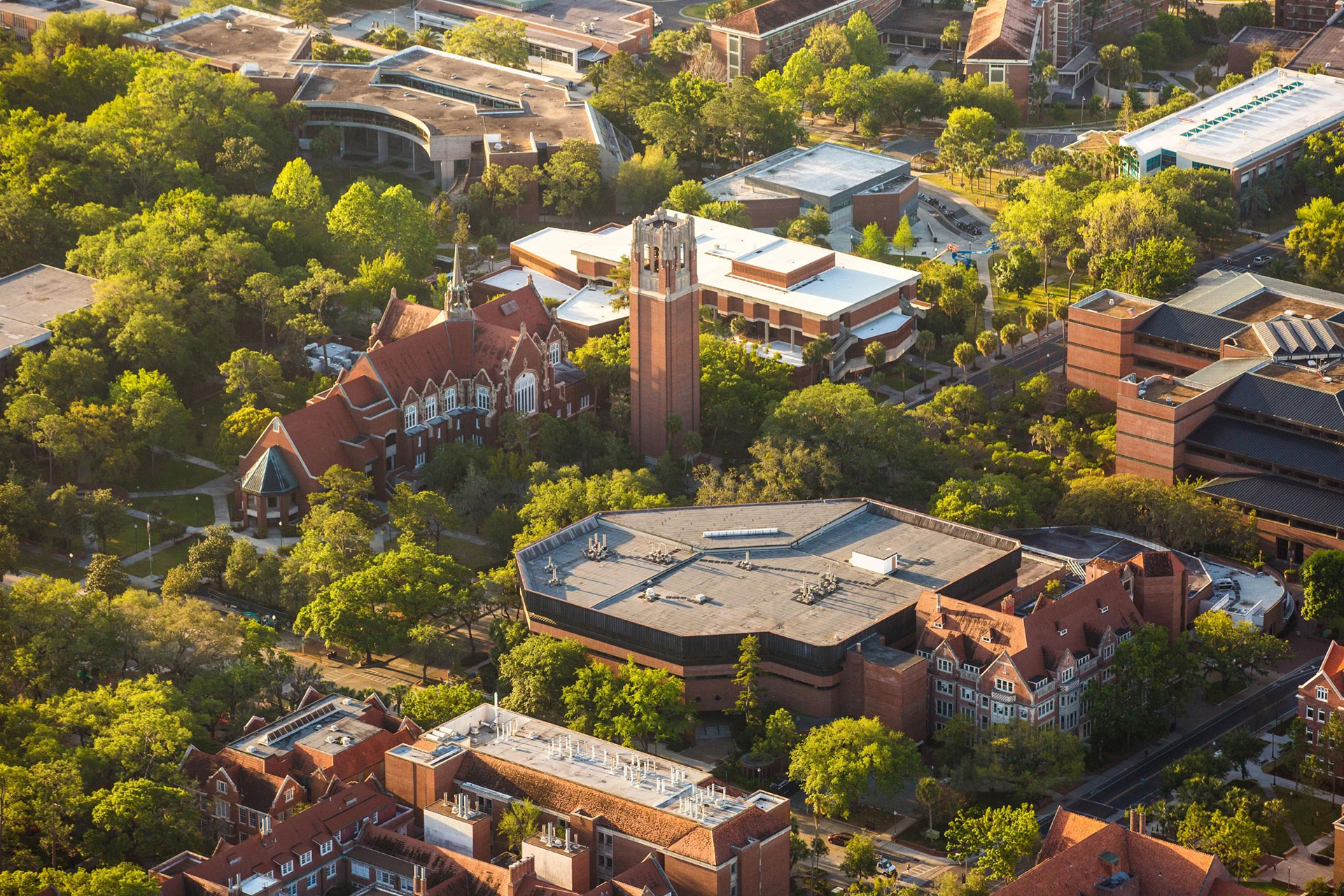
Overview
1
Western Civilization & American Civics

2
Jewish & Israel Studies

3
Outstanding Faculty

4
Jewish Life & Israel Engagement

5
Campus Clubs & Intellectual Culture

6
Antisemitism & Anti-Zionism

7
National Rankings


The JNS Campus Report: Our Methodology

This profile is part of the JNS Campus Report, an effort to evaluate American universities according to criteria that truly matter. We assess institutions across seven distinct fields: (1) the depth of their commitment to Western Civilization, American civics, and great books education; (2) the excellence of their teaching in Jewish and Israel Studies; (3) the presence of world-class faculty in the humanities and social sciences; (4) the quality of Jewish life and Israel engagement on campus; (5) conservative and independent intellectual life outside the classroom; (6) the presence and depth of antisemitism and anti-Zionism on campus; and (7) their standing in the national rankings ecosystem.
The University of Florida has built the most substantial infrastructure for classical and Jewish education at any American public university. The Hamilton School for Classical and Civic Education is an independent academic unit granting majors in Great Books and Ideas; Philosophy, Politics, Economics and Law; War, Statecraft, and Strategy, and American Government, History, Literature, and Law—with minors in Great Books and Ideas and in PPEL.
To support this, the Hamilton School has hired a group of excellent professors, from established, well-known scholars to promising young professors. Inside it sits the Robert M. Beren Program on Jewish Classical Education, which integrates Jewish thought and history, Zionism and modern Israel, and the Hebraic influence on America into a Great Books curriculum, alongside Hebrew study and a study abroad program in Israel. The Rosenthal-Levy Scholars Program offers students who want to take the Jewish classical track a four-year, full-tuition scholarship. The faculty in both Western and Hebraic Civilization courses are exceptional.
UF has a very large Jewish undergraduate population. Jewish life has traditionally been run almost entirely through Chabad, which has a large, well-established center. It serves hundreds at Friday night dinners, runs three daily minyanim, operates the Nosh Spot and the Gator Kosher Dinner meal plan, and ensures that apartment kitchens are kosher at move-in. Hillel, under Rabbi Jonah Zinn since 2019, serves the broad Jewish population and runs the university’s principal Israel travel programming.
Of roughly 6,500 Jewish students, the relatively few Orthodox students had no dedicated organization until very recently. Rabbi Shimon and Laura Vinger arrived through OU-JLIC in Fall 2026, representing a major investment in Orthodox life at UF and a bet on its growth. Still, observant students face logistical difficulties, as there is no eruv, and the Orthodox population is small.
Administratively, the record is unambiguous. Then-president Ben Sasse condemned Hamas without ambiguity, state law bars the university system from divesting from or boycotting Israel, and strict enforcement of the rules kept encampment dynamics off the campus entirely.
Western Civilization & American Civics
Does the University of Florida have BA programs, honors programs, or a unique school focused on the study of Western Civilization and American civic leadership? Are there exceptional programs or departments in the humanities and social sciences?
- The Hamilton School for Classical and Civic Education, established in recent years as an independent academic unit within UF, is one of the most significant institutional investments in great books education at any American public university.
- It offers dedicated majors in Great Books and Ideas and in Philosophy, Politics, Economics and Law (PPEL), with two additional majors—War, Statecraft, and Strategy, and American Government, History, Literature, and Law—planned for launch in Fall 2026.
- The school’s advisory board and leadership are serious, its faculty hires have been strong, and its curriculum spans ethics, just war, global politics and security, literature, faith and reason, rhetoric, and the American political order.
- Within the Hamilton School is the Robert M. Beren Program on Jewish Classical Education, partnered with the Bud Shorstein Center for Jewish Studies.
- The Beren Program adds a cluster of courses on Jewish thought and history, Zionism and modern Israel, and the Hebraic influence on America, alongside Hebrew language study and a study abroad program in Israel. This integration of the Hebraic tradition into a great books curriculum—rather than as a separate departmental offering—gives UF a distinctive claim on the attention of students seeking a unified classical and Jewish education.
- UF is home to the Rosenthal-Levy Scholars Program offering a “four-year full-tuition scholarship for exceptional undergraduates interested in the great ideas of Jewish and Western civilization and the responsibilities of American civic leadership.”
- The university’s general education requirements, while not equivalent to the Hamilton School’s depth, have earned recognition from ACTA. The Hamilton Center is an independently funded, ideologically coherent unit capable of delivering a serious liberal education to motivated students.
Jewish & Israel Studies
Does the University of Florida have excellent professors, courses, or programs on Jewish thought and civilization and on Israel and the modern Middle East?
The University of Florida hosts what can be considered the flagship program on Jewish thought and civilization on American campuses. The Beren Program on Jewish Classical Education, housed within the Hamilton School, provides the institutional framework for Jewish intellectual life at UF. It offers coursework in Jewish thought and history, Zionism and modern Israel, and the Hebraic influence on American thought—a combination that is rare at any American university, let alone a public flagship. The program supports Hebrew language study and a study abroad component in Israel.
The Rosenthal-Levy Scholars Program, housed within the Hamilton School and Beren Program. Scholars take a Hamilton School major, go through the Beren Program’s Jewish classical education curriculum, complete a mandatory Israel study abroad experience, and receive career mentorship and internship support through the Tikvah network.
Neil Rogachevsky
A political theorist and one of the most distinctive scholars of the Israeli founding working in the American academy. He comes to UF from Yeshiva University and writes on the political thought of Ben Gurion and Begin, classical political theory, and the political theory of the American founding. He teaches courses on Tocqueville, American political thought, and modern Zionism.
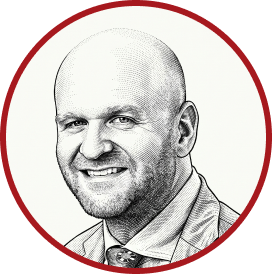
Alex Green
Scholar of classical Jewish ethics whose work engages Maimonides, Gersonides, Judah Halevi, and the ethical systems of modern political thinkers. His courses provide students with serious philosophical engagement with the Hebraic tradition.
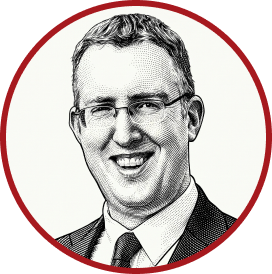
Norman Goda
directs the Jewish Studies program and is an expert on Nazi Germany, the Holocaust, and twentieth-century diplomatic history. He is, unusually among genocide scholars at American universities, an outspoken supporter of Israel on campus.
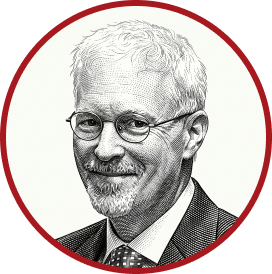
Steven Frankel
A political theorist who has taught both modern political thought as well as Jewish philosophy. Now leading the Robert M. Beren Program on Jewish Classical Education, he teaches the history of Jewish civilization and thought.
Outstanding Faculty
Does the University of Florida have world-class faculty in the humanities and social sciences?
The Hamilton School has attracted faculty of national distinction across multiple fields. Its senior hires, in particular represent, an unusual success in recruiting established scholars rather than building from junior faculty alone. The fact that they have been able to pull successful professors from other major institutions is a sign of the great confidence that those teachers have in the educational mission and distinctiveness that the Hamilton School has to offer.
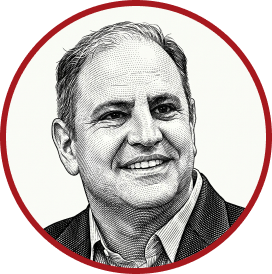
Walter Russell Mead
is one of America’s foremost public intellectuals on foreign affairs. A prolific writer for the Wall Street Journal and other major publications, his recent book Arc of a Covenant is a major study of US-Israel relations. His presence at UF gives students direct access to a scholar who has shaped the way serious Americans think about the relationship between the United States and the Jewish state.
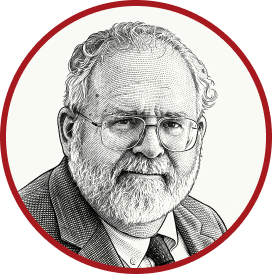
Allen Guelzo
is a leading historian of the American Civil War whose biographies of Abraham Lincoln and Robert E. Lee are among the best works of American historical writing in recent decades. His move to UF from Robert George’s James Madison Program at Princeton—where he was a senior fellow—is a marker of the positive trajectory at UF. He teaches courses on the strategy and history of the Civil War.
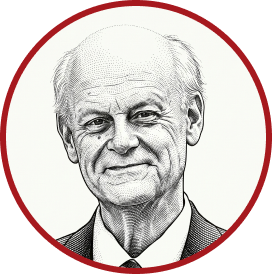
Ben Sasse
served as UF president before stepping down in 2025 for family and health reasons, but continues to teach courses on the American political order and civil discourse even into Fall 2026. A former U.S. Senator, Ben Sasse is one of the most thoughtful voices in American public life on the relationship between liberal democracy and education.

James Hankins
is currently a visiting professor at UF, after having spent four decades at Harvard. His recent two-volume history of the West (which he wrote with Allen Guelzo) is a massive undertaking and an uncommonly approachable text for a lifelong academic to have written. Accordingly, he teaches on the great books and intellectual history of the West.
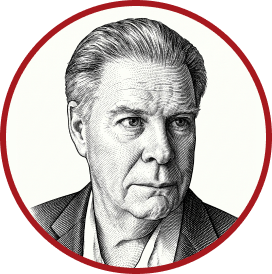
Andrew Michta
is an established expert in national security studies and international affairs, especially on the NATO and European security. At the Hamilton School he teaches courses on statecraft and grand strategy, broadly.
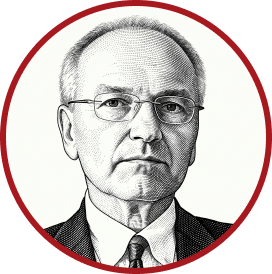
Jeremy Bailey
is a leading scholar of American political thought and constitutional development, especially of the founding generation. He teaches the primary American civics courses, as well as courses on American ideas.
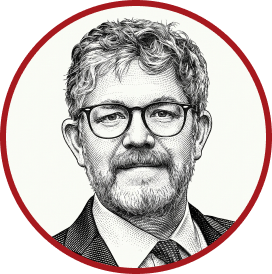
Jewish Life & Israel Engagement
How strong is Jewish life on campus—including religious community, rabbinic leadership, kosher infrastructure, and pro-Israel engagement?
Chabad
Chabad of UF, led by Rabbi Berl and Chani Goldman, is a large institution and the center of gravity for observant Jewish life on campus. It serves hundreds of students every Friday night for Shabbat dinner, and is the principal provider of kosher food for observant students. This includes:
- Davening: A minyan three times a day, which has been growing every year, along with Shabbat services on Friday night and Shabbos day. Chabad is open to and popular with Jewish students of all denominations, though its Shabbat and weekday services are primarily targeted toward Orthodox students.
- Learning: A gemara-learning session follows shacharit. Yeshiva Night is a chavruta study program in which Chabad provides a packet on a topic to study with a partner. Jewish U offers classes exploring modern topics through a Jewish lens. Chabad puts on learning events and classes consistently throughout the year.
- Kosher Food: Chabad operates the Nosh Spot, a kosher restaurant, and operates a Gator Kosher Dinner meal plan for weekday dinners. It provides food on Shabbat and holidays and hosts many events with food throughout the year at no cost. For students living in apartments off campus, Chabad helps kasher their kitchens on move-in.
- Student Base: Chabad, rather than Hillel, provides the principal social life for observant and affiliated students.
UF Hillel
UF Hillel, housed at the Schilit Hillel, serves the broad Jewish student population and runs the university’s principal Israel travel programming.
- Leadership: Rabbi Jonah Zinn has been UF’s Hillel rabbi since 2019. He came from a congregational position at Shaare Emeth in St. Louis and received his ordination from Hebrew Union College in New York City, a Reform seminary. He is well-received by Jewish students on campus and is supportive of both Orthodox and non-Orthodox students.
- Shabbat: Hillel provides kosher Shabbat dinner every Friday night.
- Learning: The Jewish Learning Fellowship is an eight-week conversational seminar in which students deepen their understanding of Judaism. Participants earn a $200 stipend on completion.
- Israel Travel: The Birthright Israel Onward Program is an immersive eight-week program in Tel Aviv in which UF students live and work in local communities, paired with companies or non-profits matching their fields of interest. Hillel also offers a free ten-day Birthright trip with May or December options, organized by Israel Outdoors, and Chabad runs a Birthright program of its own.
- Affiliated Student Organizations: The LOC First-Year Fellowship, the Jewish Student Union, JHealth, JTech, and Spread Cream Cheese Not Hate—a student-run group aimed at combatting anti-Semitism on college campuses—all operate in the Hillel orbit. The Lubavitch Chabad Student Group serves the same function on the Chabad side.
Orthodox Student Life
There is no dedicated Orthodox student organization at UF. According to OU-JLIC there are over 80 Orthodox students, alongside a large number of traditional Jews who participate in Shabbat life. Traditionally, Chabad provides most of the Orthodox structure for them.
- OU-JLIC: As of Fall 2026, UF has recently welcomed a couple from the Orthodox Union’s Jewish Learning Initiative on Campus program. Rav Shimon and Laura Vinger have been brought in to more specifically support the large number of Modern Orthodox students who already attend.
Religious Infrastructure
UF has approximately 6,500 Jewish students, about 19 percent of the total student population. The kosher food infrastructure is extensive and runs almost entirely through Chabad; the Shabbat infrastructure has two real gaps.
- Kosher Dining: Kosher food is available through Chabad, including the Nosh Spot. Reitz Union Dining Hall has a station serving hot kosher food, and most dining halls on campus carry kosher-certified packaged foods such as salads and sandwiches. The Gator Kosher Dinner meal plan covers weekday dinner, and Hillel provides kosher Shabbat dinner on Friday nights. Most observant students cook for themselves in their apartments.
- Planned Expansion: According to their social media, Chabad is building a kosher dairy café in the Slutsky Community Room in Fall 2026.
- Eruv: The UF campus does not have an eruv. There is a project to build townhouses in the vicinity of Chabad which is technically an eruv.
- Shabbat Keys: UF does not provide Shabbat keys. Whether they are needed depends on the dorm—some have physical keys and some do not, and the same is true of the apartments around campus.
- Daily Minyanim: Three daily minyanim run at Chabad. There is no minyan elsewhere on campus.
Campus Clubs & Intellectual Culture
What intellectually serious clubs, publications, and organizations exist outside of the formal curriculum?
UF has a meaningful cluster of intellectually serious student organizations outside the formal curriculum. This includes:
- The Society for Jewish Thought
- A student-led organization at the University of Florida dedicated exploring “the profound ideas that have shaped Jewish civilization and debates the contemporary challenges facing the Jewish people and Jewish state. Students delve into Jewish philosophy, history, and literature, creating an intellectual community that bridges ancient wisdom with modern questions.” The society hosts reading and study groups, seminars with visiting scholars, and evening symposia for debate between students and faculty.
- Hamilton School Society of Fellows
- The society “brings together students from across campus, united by a shared interest in exploring key themes of the Western intellectual tradition, such as freedom, the good life, justice, purpose, and meaning. Through weekly meetings, our Fellows engage in thoughtful discussions and debates on classic texts, modeling the principles of civil discourse.”
- Alexander Hamilton Society
- The UF chapter is described as “University of Florida's Premier Non-Partisan Foreign Policy, National Security, and International Relations Organization.” It hosts speakers, seminars, and debate events and connects students to careers in foreign policy, national security, and public affairs.
Antisemitism & Anti-Zionism
How strong are anti-Semitic and anti-Zionist groups and activities on campus? Are there prominent faculty that advance ideas that are actively hostile to Israel and the Jewish people?
UF’s response to October 7 was among the most direct and unambiguous at any American university. Then-President Ben Sasse issued a statement on October 10, 2023 explicitly condemning Hamas by name, calling out “moral confusion” at elite institutions that had failed to do the same, and affirming the university’s commitment to protecting both Jewish students and free speech. The statement was widely noted for its clarity and early timing relative to peer institutions.
The administrative posture was reinforced by Florida state law. UF is a member of the State University System of Florida, which is prohibited by statute from divesting from or boycotting Israel. Governor DeSantis’s October 2023 order deactivating SJP chapters across the Florida university system—subsequently walked back after a First Amendment suit and never enforced at UF—signaled the political environment in which campus officials were operating. The Stop WOKE Act, currently enjoined but applicable to UF instructors, would prohibit teaching that Jewish or Israeli identity inherently confers moral responsibility for Palestinian suffering.
Protests at UF were sizable given the campus demographics—October 7 rallies drew hundreds of participants—but remained within the bounds of time, place, and manner restrictions. The administration’s strict enforcement posture, backed by state authority, prevented the encampment dynamics seen at many peer institutions. The most significant violent incident on campus—a stampede during a vigil for October 7 victims that injured more than 30 students—was the result of a misunderstanding rather than anti-Semitic intent, and was handled as a crowd control matter.
While, like nearly every college in America, the University of Florida has many radical-left faculty members, especially throughout its traditional Humanities departments, the school and state governance do not have a history of coddling and encouraging radical activity. In fact, the existence of the Hamilton School and its associated Beren program represent an institutional movement to encourage serious scholarship and teaching on campus, and to shift the center of gravity for Humanities education in the right direction.
National Rankings
How does the University of Florida perform in various national rankings?
- Manhattan Institute/City Journal— In Fall 2025, the Manhattan Institute/City Journal produced a new system of college rankings assessing schools on intellectual seriousness, cultural sanity, and overall educational value. The MI/City Journal methodology offers cumulative rankings as well as category-specific rankings.
- UF ranks 1st overall.
- It ranks 4th in Educational Experience and 13th in Curricular Rigor, reflecting the presence strong, required liberal arts or civics coursework and major investment in those programs.
- UF ranks 6th in Heterodox Infrastructure. The existence of an institutionally backed center with its own faculty and academic majors leaves UF at the top of the rankings.
- UF ranks 3rd in Leadership Quality, 1st in Commitment to Meritocracy, and 24th in Resistance to Politicization—these especially reflect strong scores given by the lack of any DEI administration or hiring practices.
- UF ranks 48th for “Jewish Campus Climate.”
- UF ranks 6th in Outcomes, 2nd in “Payback Education Investment,” 4th in “Value Added to Education,” but 76th in “Value Added to Career.”
- Wall Street Journal — The WSJ rankings weight outcomes heavily (70%), with salary impact (50%) and graduation rate impact (20%) the dominant factors.
- UF is currently 72nd in WSJ rankings. It scores middlingly on salary impact, but very high on graduation rate, and is brought down as well by a relatively low diversity score and uneven survey results.
- ACTA’s “What Will They Learn?” — ACTA grades schools on the strength of their college-wide liberal arts curricula, scoring universities on how many of seven core subjects are required of all undergraduates.
- UF earns a B. Of the seven core subject areas, UF only requires four: composition, U.S. government and history, foreign language, and science.
- ACTA does not find any “Oasis of Excellence” at UF.
- ADL Campus Antisemitism Report Card — In response to the troubled campus environments in the wake of October 7, the ADL has been grading schools on antisemitism from F to A.
- ADL gives UF a B. UF receives the highest possible scores in publicly disclosed administrative actions (above expectations) and in Jewish life on campus (excellent), while receiving a medium score in campus conduct and climate concerns (medium).
- UF, despite having served its Jewish students after October 7 much better than schools like Princeton or Columbia, has more demerits on Administrative actions and Jewish life on campus than either of those schools. The major differences that do exist in Jewish life between the same set of schools are largely invisible to the ADL’s methodology. Effectively, the ADL criteria make it impossible to distinguish between schools with significantly variable administrative responses to antisemitism.
- U.S. News & World Report — UF is 30th in the USNWR national university rankings.
- FIRE — The Foundation for Individual Rights and Expression ranks UF 119/261 on free speech, down 74 places from 2025. UF receives an overall grade of D-, with a “green” spotlight rating, and F grades for political tolerance and administrative support.
- Forbes — UF is 30th on the Forbes list, reflecting average median salaries, high graduation rates, and the moderate number of UF graduates in prominent positions across various fields.


